Let me be honest about something the kimchi hype rarely mentions: for some people, a big bowl of it can lead to a little bloating or gas. If that’s happened to you, you’re not doing anything wrong, and your gut isn’t broken. Kimchi bloating has a few very ordinary explanations. Once you understand what’s going on, it’s usually easy to enjoy kimchi comfortably. So let me walk through why it happens, who tends to notice it, and the practical things I’d tell a friend to try.
Is kimchi bloating normal?
For a lot of people, a bit of bloating or extra gas after eating a fermented, fiber-rich, cabbage-based food is simply how digestion responds — especially if kimchi is newer to their diet. It doesn’t automatically mean something is wrong. Kimchi packs several things into one small side dish that your gut has to process: live fermentation activity, plant fiber, salt, and vegetables that are naturally a bit gassy.
I say this because people sometimes panic and swear off kimchi after one uncomfortable meal. That’s usually an overreaction. In most cases, kimchi bloating is mild, temporary, and very manageable with a few small adjustments. The point of this article isn’t to scare you off — it’s to explain the mechanics honestly so you can eat kimchi on your own terms.
Fermentation and the gas that comes with it
Kimchi is a living, fermented food. The same lactic acid bacteria that give it that tangy sourness are metabolically active, and fermented foods can introduce more microbial activity into your digestive tract. When your gut bacteria work on fermentable material, gas is a normal byproduct of that process.
This is a structure-function description, not a warning: it’s just how fermentation and digestion interact. Some people barely notice it. Others — particularly if they eat a large portion or aren’t used to fermented foods — feel more bloating for a while. Neither reaction is a problem to be fixed; they’re just different guts responding to the same food.
Fiber, cabbage, and other gassy vegetables
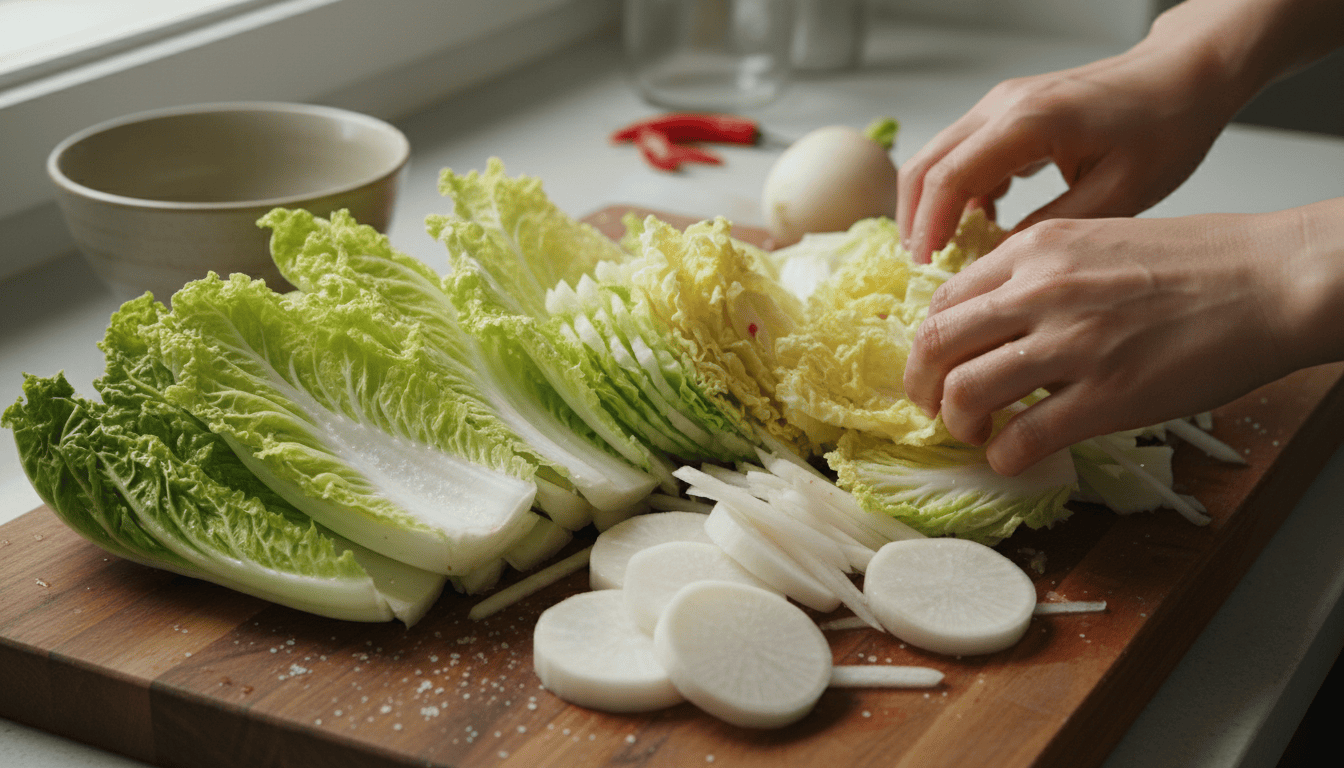
Here’s a cause people often overlook. Kimchi is built on vegetables — most classically napa cabbage, and often radish, scallion, and other add-ins. Cabbage and its cruciferous cousins are well known for producing gas during digestion, and that has nothing to do with fermentation at all. Add the fiber content of all those vegetables, and you’ve got a side dish that naturally keeps your gut busy.
If you already know that raw cabbage, broccoli, or Brussels sprouts make you gassy, it makes sense that a cabbage-forward food like kimchi might do the same. That’s not kimchi being harsh — it’s the vegetables doing exactly what those vegetables do.
Sodium, water retention, and feeling “puffy”
There’s a second kind of bloating worth separating out. Kimchi is a salted food — sodium is part of how it’s made and preserved. A high-sodium meal can leave some people feeling puffy or retaining a little water, which is a different sensation from gassy, fermentation-related bloating.
It’s easy to lump both feelings together, but they have different causes and different fixes. Gas is about what your gut bacteria are doing; the puffy, water-retention feeling is more about the salt load of the meal as a whole. If you’re eating a large portion of kimchi on top of an already salty meal, the sodium side of the equation may be part of what you’re noticing.
Who tends to notice kimchi bloating most
Not everyone feels this, and it’s worth knowing where you fall.
- People new to fermented foods. If kimchi is a recent addition to your diet, your digestion may need a little time to adjust to the extra activity.
- People sensitive to gassy vegetables. If cabbage and cruciferous veggies already bother you, kimchi’s vegetable base can too.
- People who eat large portions at once. A small side is very different from a heaping bowl. Amount matters a lot.
- People sensitive to salty foods. If a salty meal tends to leave you feeling puffy, kimchi’s sodium can contribute to that.
If you see yourself in more than one of these, that’s usually why kimchi hits you harder than it hits your friend who grew up eating it daily.
Practical tips to reduce kimchi bloating
Good news: you rarely have to give up kimchi. A few simple habits go a long way.
- Start small and build up. If you’re new to it, begin with a modest side portion and let your gut adjust over days and weeks rather than diving into a huge bowl on day one.
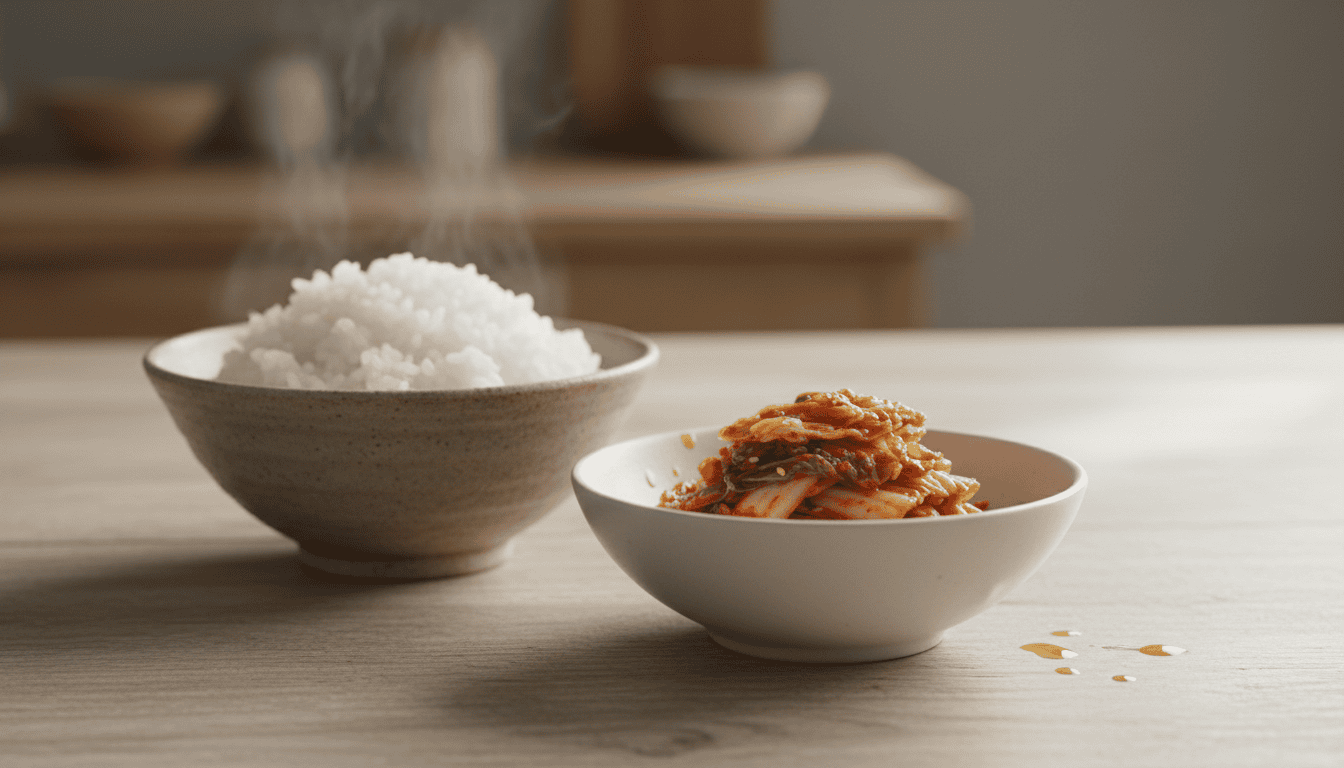
- Pair it with a balanced meal. Eating kimchi alongside rice, protein, and other foods — rather than a big pile on an empty stomach — tends to feel gentler.
- Watch total portion size. Bloating often tracks with quantity. Enjoying it as a side dish, the traditional way, is easier on your system than treating it as a main.
- Mind the salt in the rest of your meal. If the puffy, water-retention feeling is your issue, balancing sodium across the day helps.
- Chew slowly and don’t rush. Eating quickly means swallowing more air, which adds to gassiness on top of everything else.
- Give your gut time. For many people, the bloating eases as their digestion gets used to fermented foods over a few weeks.
For the bigger picture on how fermented foods and your digestive system interact — where the evidence is solid and where it’s still emerging — I go deeper in is kimchi good for gut health. Bloating is really just one small chapter in that longer, more interesting story.
When it’s worth checking with a professional
Mild, occasional bloating from a fermented, fibrous, salty food is ordinary. But you know your body better than any article does. If you regularly have significant or persistent digestive discomfort — with kimchi or anything else — that’s a conversation for a healthcare professional, not something to self-diagnose from a food blog. Nothing here is medical advice; it’s general context to help you understand a very common, usually harmless experience.
FAQ
Does kimchi bloating mean I’m allergic to it?
Not usually. The gassy, bloated feeling most people describe comes from ordinary digestion of a fermented, cabbage-based, salty food — not from an allergy. Persistent or severe reactions are worth discussing with a healthcare professional.
Will the bloating go away if I keep eating kimchi?
For many people, digestion adjusts to fermented foods over a few weeks, and the bloating eases. Starting with smaller portions and building up gradually tends to make that adjustment smoother.
Is it the fermentation or the cabbage causing the gas?
Often both. The live fermentation adds microbial activity, and cabbage is a naturally gassy vegetable on its own. Sodium can separately leave you feeling puffy. It’s usually a combination rather than a single culprit.
This article is for general information and describes fermented food in a general-wellness (structure-function) sense. It is not medical advice and does not diagnose, treat, prevent, or cure any condition. Talk to a healthcare professional about your individual needs.