I grew up eating kimchi at every meal — breakfast included. So when American friends ask me, a little skeptically, “Okay, but is kimchi actually good for my gut, or is that just another food trend?”, I get it. The wellness aisle oversells everything. Here’s the plain answer, from someone with medical training who also happens to have eaten this food his whole life.
The short answer
Yes — kimchi is a genuinely good food for your gut, for reasons that hold up better than most “superfood” claims. It’s fermented vegetables, which means it delivers fiber and the byproducts of live microbes doing their work. Research on fermented foods and the gut points in a consistent, encouraging direction.
But I want to be honest with you up front: kimchi is a helpful food, not a medicine. It supports a healthy gut as part of a broader diet. It doesn’t cure anything, and the details — like whether your jar has live cultures, and how much salt comes with it — actually matter. Let’s walk through them.
What fermentation actually does to cabbage
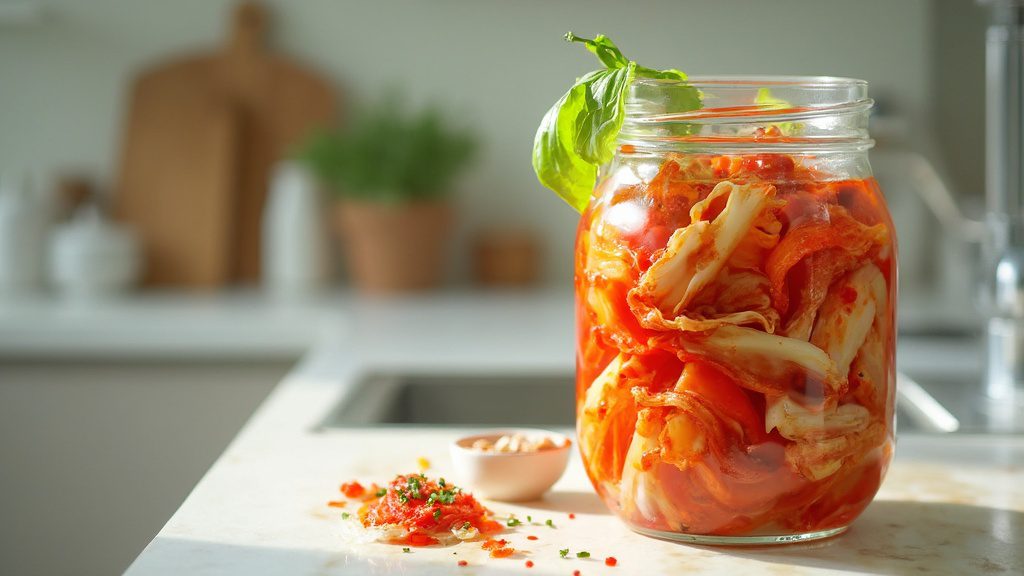
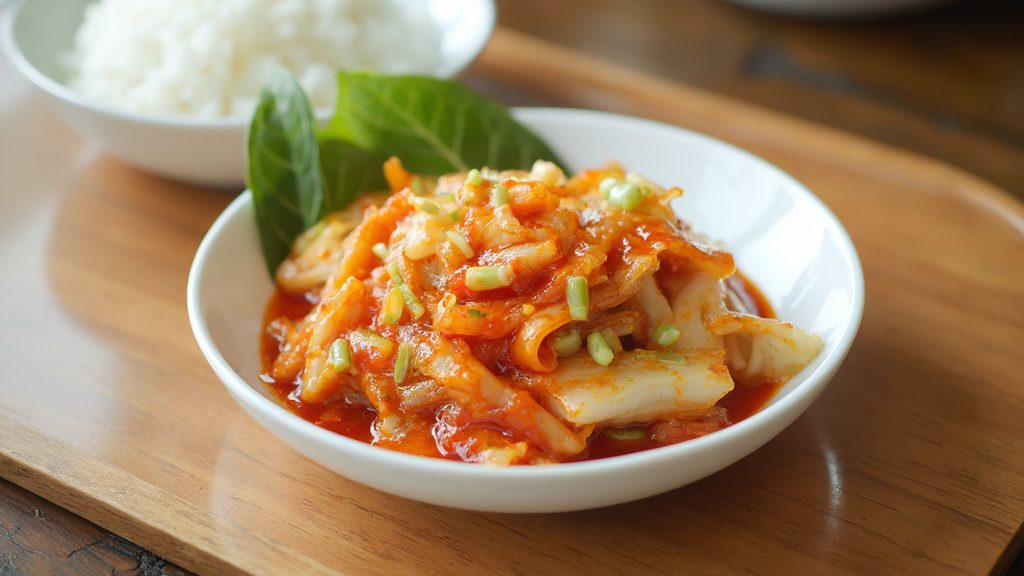
Kimchi usually starts with baechu (napa cabbage), salted and mixed with seasonings like gochugaru — Korean red pepper flakes — garlic, ginger, and scallion. Then it sits. During that time, naturally present bacteria (mostly lactic acid bacteria) feed on the sugars in the vegetables and produce lactic acid. That acid is what gives kimchi its tang, keeps it from spoiling, and signals that fermentation is happening.
Two things come out of that process that your gut cares about:
- Fiber, in a pre-worked form. The cabbage and other vegetables bring fiber, which the beneficial bacteria living in your large intestine ferment into short-chain fatty acids — compounds associated with a healthier gut lining. Your own gut microbes essentially finish the job the kimchi jar started.
- Live microbes and their byproducts. A traditionally fermented, unpasteurized kimchi contains living bacteria and the beneficial molecules they produce along the way.
There’s a reason researchers have taken fermented foods seriously as a category. A well-known Stanford study published in 2021 found that people who ate a diet high in fermented foods saw an increase in the diversity of their gut microbiome and a drop in some markers of inflammation. Kimchi wasn’t the only food in that study — yogurt, kefir, and others were included — but it sits squarely in that fermented-foods family. That’s meaningful evidence, and it’s also, importantly, about fermented foods as a group, not a magic property of kimchi alone.
Does kimchi actually have probiotics?
This is where I have to slow you down, because it’s the question most articles skip. The honest answer: it depends on the jar.
Kimchi that’s fermented and kept refrigerated, without being heat-treated, typically does contain live lactic acid bacteria — the kind associated with probiotic benefits. But not every kimchi you buy is alive. Some shelf-stable, mass-produced versions are pasteurized, which means they’ve been heated to extend shelf life. Heating improves stability, but it also kills the live cultures. You still get the fiber and flavor; you don’t get the living microbes.
A few plain rules of thumb:
- Refrigerated kimchi is more likely to be alive than a jar sitting on a warm shelf.
- Watch for signs of active fermentation — a little fizz or pressure when you open it is a good sign, not a bad one.
- Labels that mention live or active cultures, or that simply keep the product cold, are your friends.
I’ll go deeper on how to tell whether the kimchi in your fridge actually has live probiotics in a separate piece. For now: if live cultures are what you’re after, buy it cold and eat it that way.
What kimchi can’t do (and the sodium question)
Here’s the part a real doctor owes you. Kimchi supports a healthy gut; it does not treat, cure, or prevent disease. If you have a diagnosed gut condition, kimchi is not a substitute for care from your own physician. Think of it as a good habit, not a prescription.
And there’s a real trade-off to name: salt. Kimchi is salted — that’s part of how it ferments and keeps. For most people eating normal portions, that’s fine. But if you’re watching your blood pressure or have been told to limit sodium, kimchi’s salt is worth keeping in mind. The gut benefit doesn’t erase the sodium; both are true at once. A modest side-dish portion, the way it’s traditionally eaten in Korea, is very different from eating it by the bowlful. If the salt has you worried, I’ll break down the sodium question on its own soon.
How to start: a doctor’s plain plan
If you’re new to kimchi, don’t go from zero to a full plate. A few practical notes:
- Start small. A couple of forkfuls with a meal is plenty at first. Some people feel a little bloated or gassy when they suddenly add fermented foods and fiber — that’s usually your gut adjusting, and it tends to settle as you go. (If it doesn’t settle, ease off and check in with your own doctor.)
- Eat it as a side, not the main event. That’s how it’s meant to work — a flavorful, gut-friendly companion to the rest of your meal.
- Keep it cold and eat it raw when you want the live cultures. Cooking kimchi (in a stew, say) is delicious, but heat will knock out the live bacteria — you’ll still get fiber and flavor.
- Be consistent, not heroic. A little most days does more for your gut than a huge amount once in a while.
Kimchi vs. other fermented foods
People often ask whether kimchi is “better” than yogurt, sauerkraut, or kefir. The honest answer is that the best fermented food is the one you’ll actually eat regularly. They work through overlapping mechanisms — live microbes, their byproducts, and in the case of vegetable ferments, fiber.
Kimchi’s edge, if it has one, is that it’s a vegetable ferment with a lot of flavor, so it’s easy to eat often without getting bored — and variety across fermented foods may be more useful than loyalty to any single one. If you already love yogurt, you don’t have to switch. Add kimchi; don’t replace.
FAQ
Is kimchi good for gut health every day?
For most people, a normal side-dish portion daily is a reasonable, gut-friendly habit. Keep the total salt in your day in mind, and let your own tolerance guide the amount.
Why is kimchi good for gut health specifically?
Two reasons stack up: it brings fiber your gut bacteria ferment into beneficial compounds, and — when unpasteurized — it delivers live lactic acid bacteria and their byproducts. Fermented foods as a group are associated with greater microbiome diversity.
Does cooking kimchi kill the probiotics?
Heat generally kills live cultures, so a cooked kimchi stew won’t give you the live bacteria. You’ll still get the fiber and flavor. For live cultures, eat it cold and raw.
Can kimchi replace a probiotic supplement?
It’s a food, not a substitute for anything your doctor has recommended. Many people are happy getting live cultures from fermented foods, but that’s a conversation for you and your own physician.
\n
More kimchi and fermented-food guides will be collected in the Gut Health topic hub.
\n