Here’s a question I get a lot from American friends who’ve just discovered kimchi: does kimchi have probiotics? The short version is usually yes — but with a catch most people don’t know about. Not every jar on the shelf is actually alive by the time it reaches you. So let me explain what “probiotics” really means here, why some kimchi has live cultures and some doesn’t, and how you can tell the difference before you buy.
Does kimchi have probiotics? The short answer
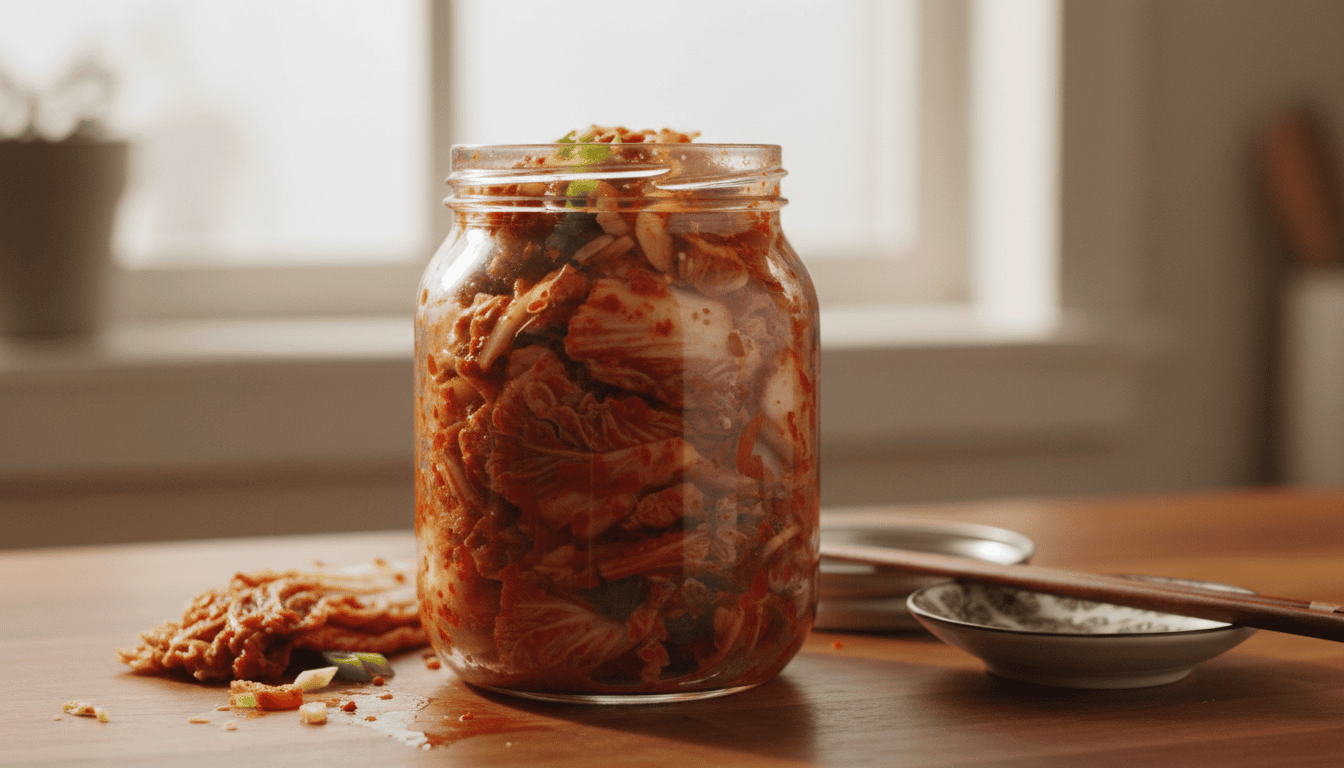
Traditionally made kimchi is a fermented food, and fermentation is driven by live bacteria — mostly lactic acid bacteria like Lactobacillus and its relatives. As the cabbage and seasonings sit and sour, those bacteria multiply. So a properly fermented, unpasteurized kimchi does contain live microbial cultures. That’s the “probiotic” part people are asking about.
But two things can change that. First, heat: if kimchi is pasteurized (heated to extend shelf life), the live cultures are largely knocked out. Second, time and handling: cultures are living things, and their numbers shift depending on how the kimchi is made, stored, and shipped. So the honest answer isn’t a flat “yes” — it’s “usually, if it’s the right kind.”
What “probiotics” actually means
The word gets thrown around loosely, so it’s worth being precise. In the research world, “probiotics” generally refers to live microorganisms that, in adequate amounts, are associated with general wellness — often described in the context of gut and digestive health. That’s a structure-function way of talking about food: it describes what the microbes are and where they act, not a promise that a jar of kimchi treats, prevents, or cures anything.
I want to be clear about that line because it matters. Fermented foods like kimchi are associated in some studies with a more diverse gut microbiome. That’s genuinely interesting. But “associated with” is not the same as “will fix your gut,” and any honest doctor will keep those separate. If you see kimchi marketed as a cure for a medical condition, that’s a red flag, not a selling point.
Why not all store-bought kimchi is alive
This is the part that surprises people. You’d assume anything labeled “kimchi” is bubbling with bacteria. Often it is — but not always.
- Pasteurized kimchi. Some brands, especially those built for long shelf life and wide distribution, heat-treat the product. That kills most of the live cultures. It still tastes like kimchi; it just isn’t a live food anymore.
- Vinegar-based “quick” versions. A few products get their sour tang from added vinegar rather than real fermentation. Sour flavor doesn’t guarantee live bacteria.
- Very old or temperature-abused jars. Even real fermented kimchi is a living system. Long storage and warm handling change the balance of what’s inside.
None of this makes non-live kimchi “bad” — it’s still a tasty, veggie-packed side dish. But if live cultures are the reason you’re buying it, you can’t assume every jar delivers them.
How to tell if your kimchi still has live cultures
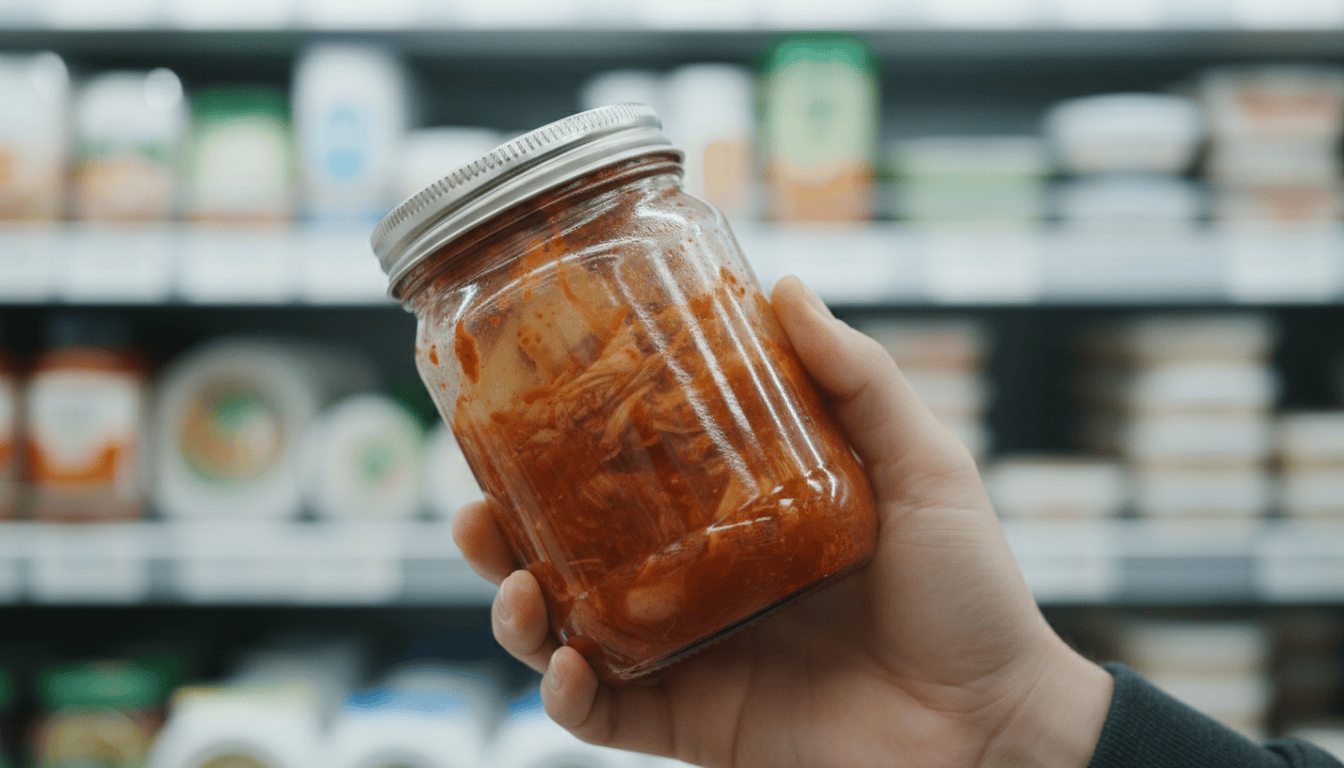
You can’t see bacteria, but you can read the signs. Here’s what I look for at the store and in my own fridge.
- Check the label for “pasteurized.” If it says pasteurized, assume the cultures are mostly gone. If it doesn’t, that’s a good start.
- Find it in the refrigerated section. Live, fermenting kimchi is kept cold. Shelf-stable jars sitting at room temperature are more likely heat-treated.
- Look for real fermentation, not added vinegar. Scan the ingredients. Traditional kimchi sours from its own bacteria, not from a splash of vinegar.
- Watch the jar. Live kimchi keeps fermenting slowly — it can get fizzier and more sour over time, and the lid may build a little pressure. That activity is a sign something’s alive in there.
Fresh vs. pasteurized vs. long-fermented
Think of kimchi on a spectrum rather than as one thing.
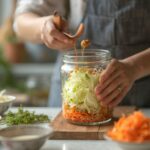
Fresh (young) kimchi has been fermenting for a short time. It’s crisp and mildly sour, and its cultures are active but still building. Long-fermented kimchi — the deeply sour, funky stuff my family used for stews — has fermented for weeks or months. It’s very much alive and often more acidic. Pasteurized kimchi sits outside this spectrum: it was heated after fermenting, so it’s stable and consistent but no longer a live-culture food.
There’s no single “best” here. Long-fermented kimchi is fantastic in cooking. Fresh kimchi is great as a crunchy side. Just know that cooking kimchi — say, in a hot stew — also heats it, which reduces live cultures in that dish. If live cultures are your goal, eat some of it raw.
Getting the most live cultures from your kimchi
If you’re eating kimchi partly for the fermentation, a few simple habits help you actually get it.
- Buy refrigerated, unpasteurized kimchi, and keep it cold at home.
- Eat some of it raw as a side, rather than only cooking it into hot dishes.
- Don’t overthink the amount. A regular serving alongside a meal is the everyday way Koreans eat it — no megadose required.
For the bigger picture on how fermented foods fit into digestion and the microbiome — and where the evidence is solid versus still emerging — I go deeper in is kimchi good for gut health. This piece is really the companion question: not just whether kimchi is good for you, but whether the jar in your hand is actually alive.
FAQ
Does cooking kimchi kill the probiotics?
Heating it — like simmering it in a stew — reduces the live cultures, the same way pasteurization does. The dish is still delicious and nutritious, but if you want the live-culture angle, eat some kimchi raw.
Is homemade kimchi more probiotic than store-bought?
Homemade kimchi is unpasteurized by definition and ferments in your fridge, so it’s reliably a live food. Store-bought can be too — you just have to check that it’s refrigerated and not pasteurized.
Does more sour mean more probiotics?
More sour usually means more fermentation has happened, so live cultures are likely present. But sourness alone isn’t proof — vinegar-based products taste sour without being fermented. Read the label.
This article is for general information and describes fermented food in a general-wellness (structure-function) sense. It is not medical advice and does not diagnose, treat, prevent, or cure any condition. Talk to a healthcare professional about your individual needs.