Most lists of the worst foods for gut health read like a ban order: cut the sugar, cut the bread, cut the dairy, cut the coffee — and by the end there’s nothing left to eat on a Tuesday night. That doesn’t help someone who’s bloated three afternoons a week and just wants to know which everyday foods are behind it. So this article does two things instead. It ranks the usual suspects by how often they actually cause trouble, and it explains the three mechanisms — microbial diversity, gut lining irritation, and digestive timing — that decide whether a food is a problem for nearly everyone or only for some people. The goal isn’t to cut nine foods. It’s to figure out which one or two are yours.
Why Some Foods Are Harder on Your Gut Than Others
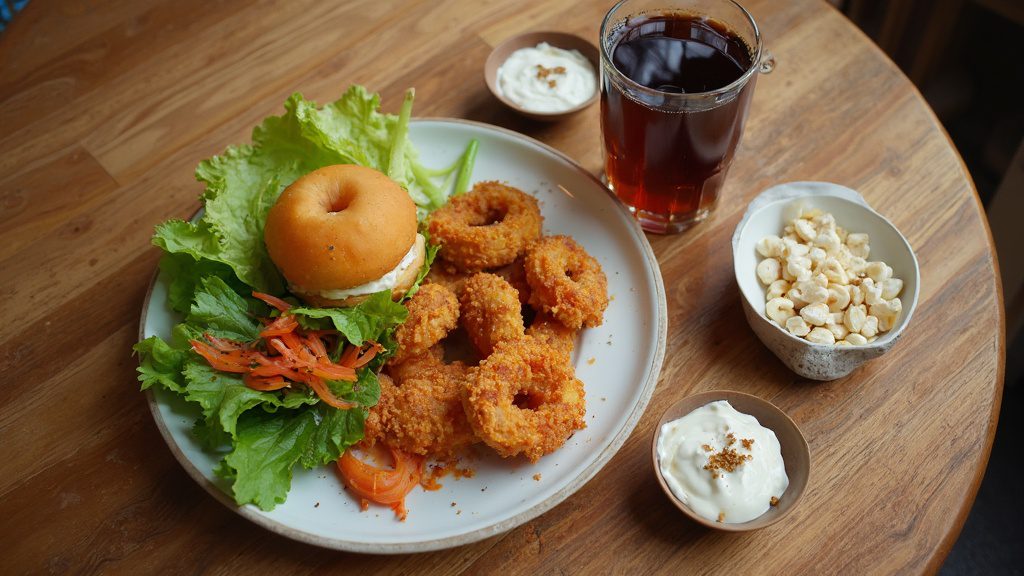
A food lands on a “worst for gut health” list for one of three reasons, and knowing which one applies tells you a lot. The three paths: it starves your gut bacteria, it irritates the lining of your digestive tract, or it changes how fast things move through you. Most foods on any credible list work through just one. A few work through all three, which is why they sit at the top.
Path one: it crowds out what your bacteria eat. The bacteria in your colon don’t live on protein or fat. They ferment fiber and certain resistant starches that survive the trip through your small intestine. Feed them a wide range of plant fibers and you tend to see a wider range of bacterial species; feed them a narrow range and the population narrows too. The NIH’s Human Microbiome Project established diversity as one of the more reliable markers researchers use to describe a gut community — though I’ll say plainly that “more diverse” isn’t a health score you can read off a lab report. The practical piece is simpler. The Dietary Guidelines for Americans lists fiber as a nutrient of public health concern precisely because most US adults fall short of the recommended intake. A food that pushes fiber off your plate does its damage by subtraction, not by anything toxic in it.
Path two: it irritates the lining. Your gut wall is a single layer of cells with a mucus coat over it, and a few things in the modern food supply interact with that barrier directly. Alcohol is the best-documented example. Certain food additives — particular emulsifiers, in animal studies — have been shown to thin that mucus layer, though the human evidence is still developing, and I’d be skeptical of anyone who states it more confidently than that. This is the path where individual variation is widest.
Path three: it changes your digestive timing. Fat slows stomach emptying. Large volumes of poorly absorbed carbohydrates pull water into the small intestine and reach the colon still intact, where bacteria ferment them and produce gas — the mechanism Monash University’s FODMAP research has documented in detail. Neither of those is damage. It’s mechanics. But mechanics are what you actually feel two hours after dinner, and they explain how a food can make you miserable without harming you at all.
That distinction matters more than anything else here. Path one is a slow, population-wide pattern. Path three is an acute, highly personal response. When someone tells me a food “destroys” their gut, they’re almost always describing path three — real discomfort, but not injury.
One more thing before the list. Sugar gets singled out constantly, and the mechanism is more specific than “sugar feeds bad bacteria,” a phrase that’s been repeated into meaninglessness. If you want the actual picture, covers it. For now, hold onto the three paths. Everything below is ranked by how often it causes trouble in real life, and I’ll name the path each one works through.

The Worst Foods for Gut Health, Ranked by How Often They Cause Trouble
Ranked by how often they actually cause problems — not by how alarming they sound — the list starts with ultra-processed food and ends with dairy, which belongs here only for the people who genuinely react to it. Each entry names its path and a swap that’s easier than quitting.
1. Ultra-Processed Snacks and Packaged Meals
Path one, mostly, and the biggest item on the list by a wide margin. The NOVA classification system, developed at the University of São Paulo and now used in nutrition research worldwide, defines ultra-processed food as industrial formulations built largely from substances extracted from foods — protein isolates, modified starches, refined oils — plus additives you’d never find in a home kitchen. The gut problem isn’t one villain ingredient. It’s that these foods are engineered to be fiber-poor and calorie-dense, so a diet built on them narrows the range of plant material reaching your colon. Diversity in, diversity out.
Swap: keep one high-fiber snack in the house that takes zero prep — roasted chickpeas, a bag of clementines, plain popcorn.
2. Added Sugar and Sugary Drinks
Paths one and three together. The American Heart Association recommends no more than about 25 grams of added sugar a day for most women and 36 for most men. A single 12-ounce soda clears the lower figure by itself. Liquid sugar hits fast, arrives without fiber, and in some people pulls water into the small intestine on the way through. That’s the bloating.
Swap: sparkling water with a squeeze of citrus, or barley tea — what sits on the table in most Korean homes, and it has no sugar at all.
3. Fried and Very High-Fat Foods
Path three, primarily. Fat is the strongest brake on stomach emptying we know of, which is why a fried dinner still feels like it’s sitting there at bedtime. That’s mechanics, not damage, and the fix is usually portion and timing rather than elimination. People with reflux notice this one hardest.
Swap: pan-sear or oven-roast at high heat instead of deep-frying. You keep the browning, you lose the fat load.
4. Alcohol
Path two, and the most underrated item here. Alcohol interacts with the gut lining directly, and the effect is dose-dependent — the research is far more consistent on heavy intake than on a glass of wine with dinner. I bring it up because people will scrutinize their bread while drinking four nights a week and never connect the two.
Swap: not abstinence, necessarily. Just count the nights honestly for two weeks before you decide it isn’t a factor.
5. Processed and Deli Meats
Path one, with a separate consideration on top. The International Agency for Research on Cancer, part of the WHO, classifies processed meat as a Group 1 carcinogen based on colorectal cancer evidence. That’s a statement about how strong the evidence is, not about how much risk comes from one sandwich. For day-to-day gut symptoms, the more relevant issue is that these meats run high in fat and sodium and usually show up alongside refined bread.
Swap: roast a chicken breast, or keep canned fish on hand for sandwiches a couple of times a week.
6. Refined Flour and Low-Fiber Carbs
Path one. White bread, most breakfast cereals, standard pasta — none of these harm you directly. They just take up the space where fiber would have been. Given how far short of the recommended fiber intake most American adults fall, that displacement is the whole story.
Swap: one meal a day on whole grains. Barley, brown rice, oats. You don’t need all three meals.
7. Artificial Sweeteners and Sugar Alcohols
Path three for sugar alcohols, unsettled for the rest. Sorbitol, mannitol, xylitol, and erythritol are poorly absorbed by design, so they reach the colon intact and ferment. That much is well established, and it’s why sugar-free gum and “keto” desserts cause so much gas. Whether non-caloric sweeteners like sucralose meaningfully change human gut bacteria is a genuinely open question — some studies suggest an effect, others don’t, and anyone telling you it’s settled is ahead of the data.
Swap: if sugar-free products bother you, check the label for anything ending in “-ol” first.
8. Common Emulsifiers and Additives
Path two, with an honest caveat. Polysorbate 80 and carboxymethylcellulose showed mucus-layer effects in mouse studies, and small human trials have followed. But we’re not at the point where I’d tell a healthy person to start scanning labels for them. This item is here because it’s a real research thread, not because it should reorganize your grocery list.
Swap: nothing specific — eating less packaged food handles it automatically.
9. Dairy — Only If You Actually React to It
Path three, for a specific group. Lactose intolerance is a real, measurable difference in lactase enzyme activity, and it’s common across much of the world’s adult population, including most people of East Asian descent. If you don’t have it, dairy isn’t on your list at all. Fermented dairy — yogurt, aged cheese — is often tolerated even by people who react to milk, since fermentation consumes much of the lactose.
Swap: plain yogurt or hard cheese instead of milk, before you conclude dairy is the problem.
For the other side of this list — what to add rather than what to cut — covers it in the same order of priority.
What Actually Happens in Your Gut After a Trigger Meal
The discomfort you feel at 9 p.m. usually started with a meal at 6, and that delay is the most useful clue you have. Digestion runs on a fairly predictable clock — stomach, small intestine, colon — and each stage produces a different sensation. Knowing roughly when a symptom shows up tells you which stage it came from, and that shortens your suspect list fast.
Within 30 minutes. Whatever you feel this early is happening in your stomach, not among your gut bacteria. Fullness out of proportion to the portion, pressure under the ribs, reflux — that’s a slow-emptying stomach, and fat volume is the usual driver. The bacteria haven’t touched the meal yet. They won’t for hours. So when someone tells me a food gave them gas “immediately,” we’re almost always talking about swallowed air or a backed-up stomach, not fermentation.
Two to four hours. The meal has moved into the small intestine. This is where poorly absorbed carbohydrates start pulling water in — osmotic load, in the technical phrasing — and where lactose sits undigested if your lactase activity is low. The sensation is different from stomach fullness: more sloshing, cramping, and urgency than pressure. Sugar alcohols land squarely in this window, which is why a piece of sugar-free candy in the afternoon can wreck your evening.
Four to eight hours, sometimes into the next morning. Now the residue reaches the colon and the bacteria go to work. Fermentation produces hydrogen, carbon dioxide, and in some people methane — real gas, in real volume. Monash University’s FODMAP research has mapped this carefully, and one of its more counterintuitive findings is that gas production itself isn’t what separates people who feel fine from people who don’t. Everyone ferments. The difference is largely visceral sensitivity — how loudly the gut reports what’s happening — which is why two people can eat the same beans and only one of them cancels plans.
The next day. Stool changes show up here, not earlier. Looser, more urgent, or the opposite. If you ate something at dinner and your bathroom pattern shifts the next morning, that timing is consistent. It’s not a coincidence, and it’s not “instant.”
Two things follow from this clock. First, the food you blame is often the wrong one. People fixate on the last thing they ate before symptoms hit, but a six-hour lag means the culprit was lunch. Second, the type of symptom points to the stage: pressure and reflux point upstream, cramping and urgency point to the small intestine, distension and gas point to the colon.
That second point is worth sitting with, because “bloating” gets used for all three and they don’t share a cause. For the fuller breakdown of which foods produce which kind, goes through it in detail.
One honest caveat. This clock is a general pattern, not a fixed schedule. Transit time varies a lot between people, and stress, sleep, and how much you moved after eating all shift it meaningfully. Use the timing to narrow your suspects, not as proof.
Which of These Foods Are Actually Your Problem — A Two-Week Self-Test
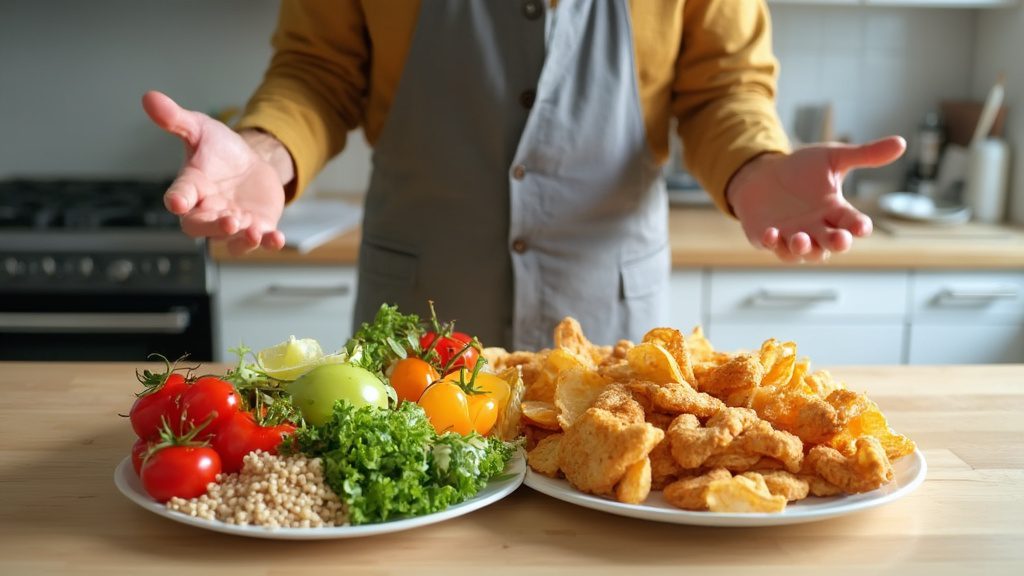
Remove one category at a time for two weeks, then put it back and watch what happens. That’s the whole method, and it beats any elimination diet you’ll find online — because cutting six things at once and feeling better tells you almost nothing about which of the six mattered.
Let me be blunt about why the “cut everything” approach fails. When people drop gluten, dairy, sugar, alcohol, and processed food all at once, three things change simultaneously: what they’re eating, how much they’re cooking at home, and how closely they’re paying attention. If symptoms improve, the improvement is real but unattributable. And almost nobody sustains that kind of restriction long enough to reintroduce anything methodically, so they end up permanently avoiding foods that were never the problem. That’s a worse outcome than the bloating, for the reason path one already covered: a narrower diet feeds a narrower set of bacteria.
Step 1: Track Before You Cut
Spend the first week changing nothing. Just record what you eat and how you feel, twice a day, in whatever app is already on your phone.
Four fields is enough: what you ate, roughly when, what you felt, and roughly when you felt it. That last field is the one people skip and the one that carries the most information — the clock above is why. Log alcohol every single day, honestly, including the nights it was “just one.” In my experience, this is where most people’s baseline turns out to look different from what they’d have described from memory.
A baseline week also catches something a self-test can otherwise miss: whether your symptoms track with food at all. If your worst days are Sundays and Mondays no matter what you ate, or they line up with bad sleep or a hard stretch at work, food may not be the main lever.
Step 2: Remove One Category for Two Weeks
Pick the category from the ranked list you eat most often — not the one you’re most suspicious of. Frequency beats suspicion, because a food you eat twice a month can’t explain symptoms you get three times a week.
Two weeks is the minimum for a reasonable read. Symptoms fluctuate week to week for reasons that have nothing to do with diet, so a three-day trial mostly measures noise. Keep everything else steady — same sleep schedule, same coffee, same exercise — and keep the log running.
One rule matters more than the rest: remove the category, don’t replace it with a “free from” version of the same thing. Swapping regular soda for diet soda trades one entry on the list for another. Swapping wheat bread for a gluten-free loaf usually trades whole grain for refined starch.
Step 3: Reintroduce and Watch
Bring the food back in a normal-sized portion on a single day, then wait three days before you conclude anything. Reactions can lag, and one clean day doesn’t clear a food.
If symptoms come back clearly, you’ve found something worth managing — usually by frequency and portion, not total elimination. If nothing happens, that category is off your list and you move to the next one. Both results are useful. The second one is arguably more valuable, because it hands you back a food you were about to give up for no reason.
If you suspect fermentable carbohydrates specifically — the onion, garlic, wheat, legume cluster — there’s a more structured version of this process that a dietitian typically supervises, and walks through what it actually involves. I’d point you there rather than improvising alone, since reintroduction is where it’s easiest to go wrong.
Budget six to eight weeks to test three categories properly. That’s slower than most people want. It’s also the difference between knowing your trigger and guessing at it for years.
What I See Most Often in Practice — And What People Get Wrong
When someone comes to me convinced one specific food is wrecking their gut, that food is usually not the main issue. The pattern I run into most is a narrow diet — three or four vegetables on rotation, one grain, not much fiber overall — and the “trigger food” is simply the most noticeable thing in an otherwise thin week. The Dietary Guidelines for Americans has flagged fiber as underconsumed across the US adult population for years, and that shortfall shows up in how people feel long before any single item on the list does.
Here’s what that looks like in practice. I’ll ask someone to list every different plant they ate last week — every vegetable, fruit, grain, bean, nut, seed, herb. Most people land between eight and twelve. Then picture a Korean home table on an ordinary weeknight: rice, a soup with two or three vegetables in it, kimchi, and three or four small side dishes called banchan, each usually a different vegetable prepared a different way. That’s not a special-occasion spread. That’s Tuesday. The count is easily twice as high, and nobody’s tracking anything.
I’m not saying everyone should eat Korean food. The point is that variety came free with that structure, and it doesn’t come free with the American one, where a plate is typically one protein, one starch, one vegetable. If you want to change something about your gut this month, adding four plants you don’t currently eat will probably do more than removing one you do.
The mistake I see most: cutting gluten or dairy first, on suspicion. These two get cut before anything else because they’re the most talked about, not because they’re the most likely. And they usually get cut in ways that make the test worthless — gluten swapped for refined gluten-free starch, dairy swapped for a sweetened oat beverage. Then, when symptoms don’t resolve, people decide their gut is “broken” rather than that they tested the wrong variable. If you genuinely suspect celiac disease, this is worth saying clearly: testing has to happen while you’re still eating gluten, so cutting it first gets in the way of an answer. That’s a conversation for a physician, not a self-test.
The thing that’s underestimated almost every time: alcohol. It’s the most consistent gap between what people report and what their log shows. Four drinks a week spread across four nights doesn’t feel like a pattern to the person doing it. On paper, it looks like one. When someone has been methodically eliminating foods for months with no progress, this is the first place I look.
And one more: expecting a fast turnaround. Fiber added abruptly often makes gas worse for a week or two before it settles. That’s your bacteria adjusting to a substrate they haven’t seen in a while, not a sign the food is wrong for you. Ramp up slowly, and give any change three to four weeks before you judge it.
The instinct behind all of this makes sense. Removing something feels decisive; adding something feels vague. But diversity in, diversity out runs the other direction, and you can’t remove your way to a more varied plate. If you’re ready to work from that side, is where I’d start.

Swaps That Are Easier Than Cutting Things Out
Change the default, not the rule. A swap you make once — what’s in the pantry, what you order without thinking — outlasts any resolution to avoid something, because it doesn’t ask you to decide anything at 3 p.m. when you’re hungry and tired. Here are four, organized around the times of day where the list items actually cluster.
Breakfast. The easiest meal to fix, because most American breakfasts are refined flour and sugar in some arrangement, and almost nobody is emotionally attached to their cereal. Oats — steel-cut, rolled, whatever you’ll actually cook — take about ninety seconds and knock out two list items at once. For a real upgrade, add plain yogurt alongside. In Korea, breakfast is often just rice, soup, and a few vegetable sides, which sounds strange to American ears until you realize it’s the same idea as a savory grain bowl. The specific foods aren’t the point. The point is that breakfast is where refined starch is most concentrated and most easily displaced.
Lunch. The sandwich is where processed meat and white bread stack up together, and the fix isn’t giving up sandwiches. Buy a rotisserie chicken on Sunday and use it Monday through Wednesday. Or keep canned sardines or tuna on the shelf. If you’re eating out, the practical move is choosing a place where the default plate already has more than one vegetable on it — a rice bowl with two or three toppings, a salad with beans in it — instead of trying to order carefully somewhere built around one.
Snacks. This is where the list does its quietest damage, because snacking is unplanned and defaults to whatever’s closest. So change what’s closest. A bowl of clementines on the counter and roasted chickpeas in the cabinet will beat willpower every time. For a Korean version: roasted seaweed sheets are salty, crunchy, cost almost nothing, and are basically a vegetable. My family ate them the way American kids eat chips.
Drinks. Liquid sugar is the highest-leverage swap on this page and the simplest. Sparkling water with citrus, unsweetened iced tea, or boricha — roasted barley tea, which is what’s on the table in most Korean homes, served hot in winter and cold in summer. It tastes toasty, faintly nutty, and has no sugar. The tea bags are at any Korean grocery, and a pitcher for the week takes about five minutes.
Two notes on all of this.
First: aim for frequency, not elimination. Going from five sodas a week to one is a bigger change in your actual intake than going from one to zero, and it’s the change you’ll still be making in six months. Same math for fried food, deli meat, and alcohol. Perfect adherence to a strict rule for three weeks does less than a loose rule you keep for three years.
Second: every swap above adds something. Oats add fiber. The chicken and beans add variety. Seaweed adds a plant you weren’t eating. That’s deliberate — the diversity point coming in through the back door, where it doesn’t feel like a project.
One caution. If you’re increasing fiber across several of these at once, go one swap at a time and give each about two weeks. Adding oats, beans, and whole grains in the same week will make you gassier before it makes you comfortable, and people quit at exactly that point — right before it settles.
When Diet Changes Aren’t Enough — Signs to Get Checked
Some symptoms don’t belong in a self-test at all, and knowing which ones can save you months. Everything above assumes ordinary discomfort — bloating, gas, irregularity that tracks loosely with what you ate. The signs below are a different category, and the right move with any of them is a physician, not a food log.
Get evaluated promptly if you notice:
- Blood in your stool, or black, tarry stools
- Unintentional weight loss you didn’t set out to cause
- Symptoms that wake you at night — pain or diarrhea that pulls you out of sleep is different from daytime discomfort
- Persistent vomiting, or trouble swallowing
- A clear change in bowel habits lasting several weeks with no obvious cause
- Fever alongside digestive symptoms
- Iron-deficiency anemia turning up on routine bloodwork
- A family history of colorectal cancer, celiac disease, or inflammatory bowel disease paired with new symptoms
None of these means something serious is happening. They mean the question is no longer answerable from your kitchen. The American Cancer Society and the US Preventive Services Task Force both recommend that colorectal cancer screening start at age 45 for people at average risk, and that’s worth knowing regardless of how your gut feels — screening is for people without symptoms, which is the whole point of it.
There’s a timeline worth holding onto, too. If you’ve run the two-week test on your two or three most-eaten categories and you’re roughly six weeks in with nothing to show for it, stop testing and get evaluated. At that point you’ve either got a trigger the food log can’t see, or something the food log was never going to explain — celiac disease, IBS, small intestinal bacterial overgrowth, a thyroid issue. All of those have real diagnostic pathways, and none of them are identifiable by elimination alone.
One more thing from experience. People wait far longer than they should here, usually because the symptoms are embarrassing or because they feel they ought to be able to sort it out themselves. There’s also a version of self-directed eating that stops being useful and turns into anxiety about food, where the list of “safe” foods keeps shrinking and meals stop being enjoyable. If you notice that happening, that’s its own reason to bring in a registered dietitian. A narrowing diet is a problem in itself.

If I had to compress all of this into one sentence: the worst foods for gut health are rarely worst for everyone, and the useful question is which of them is worst for you. Nine categories made the list because they show up most often — ultra-processed packaged food, added sugar, fried and very high-fat meals, alcohol, processed meats, refined flour, sugar alcohols, certain emulsifiers, and dairy for the people who genuinely react to it. But in my own experience, and in what the dietary data on American adults keeps showing, the bigger pattern is usually what’s missing rather than what’s present.
So start smaller than you think you need to. Pick the one category you eat most often, cut back for two weeks, keep a short daily note on how you feel, then bring it back and watch. That single loop will tell you more than any list on the internet, including this one. And if symptoms persist past about six weeks, or you notice any of the warning signs above, take it to a physician or a registered dietitian rather than sorting it out through diet alone. When you’re ready to move from subtracting to adding, is the natural next read.
함께 보면 좋은 글
- best foods for gut health
- foods that cause bloating and gas
- low FODMAP foods list
- how sugar affects gut bacteria