If you’ve fallen for kimchi and now eat it with everything, at some point you probably ask: how much kimchi should I eat per day? I get this question constantly, and I’ll give you the honest answer up front — there’s no magic number that fits everyone. But there is a practical, sensible way to think about it, and that’s more useful than a single gram count you’d forget by tomorrow. Let me walk you through how I actually think about daily kimchi, sodium, tolerance, and the signals that tell you you’ve had a bit too much.
How much kimchi should I eat per day, realistically?
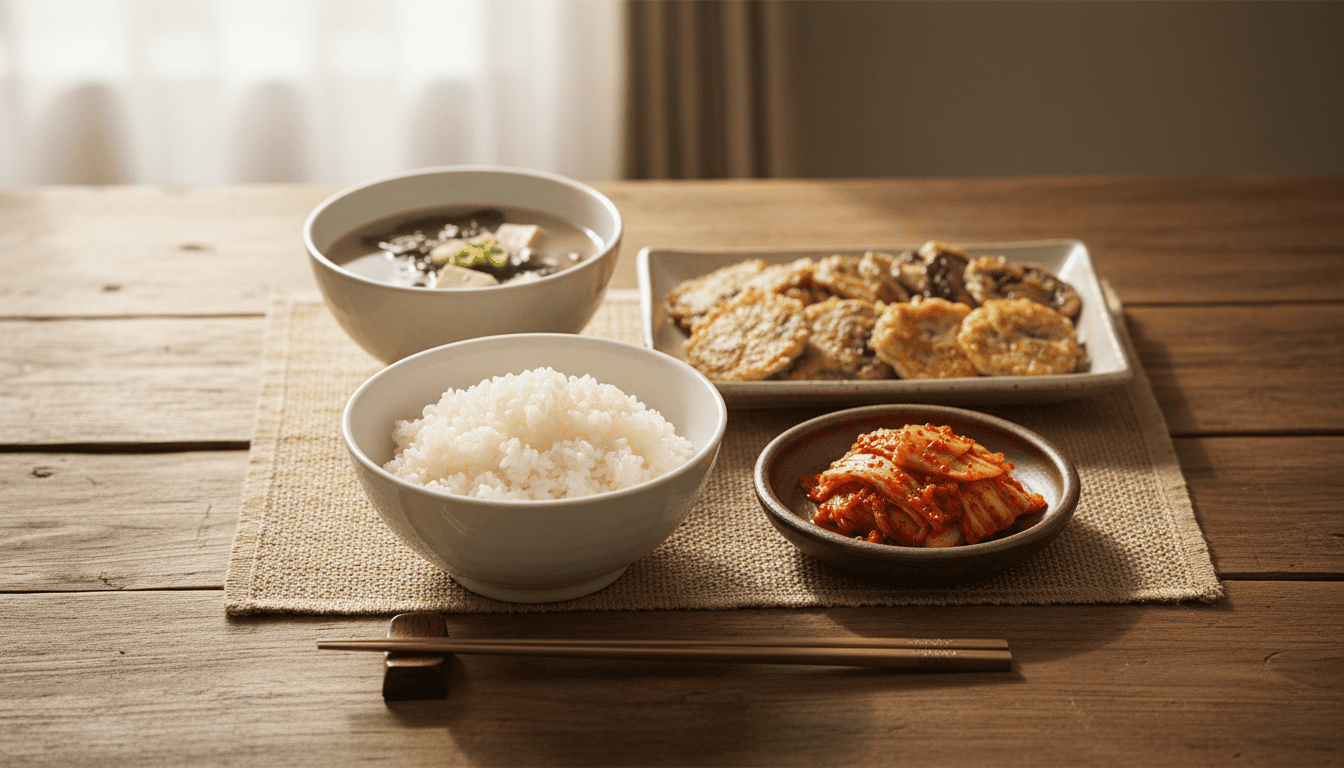
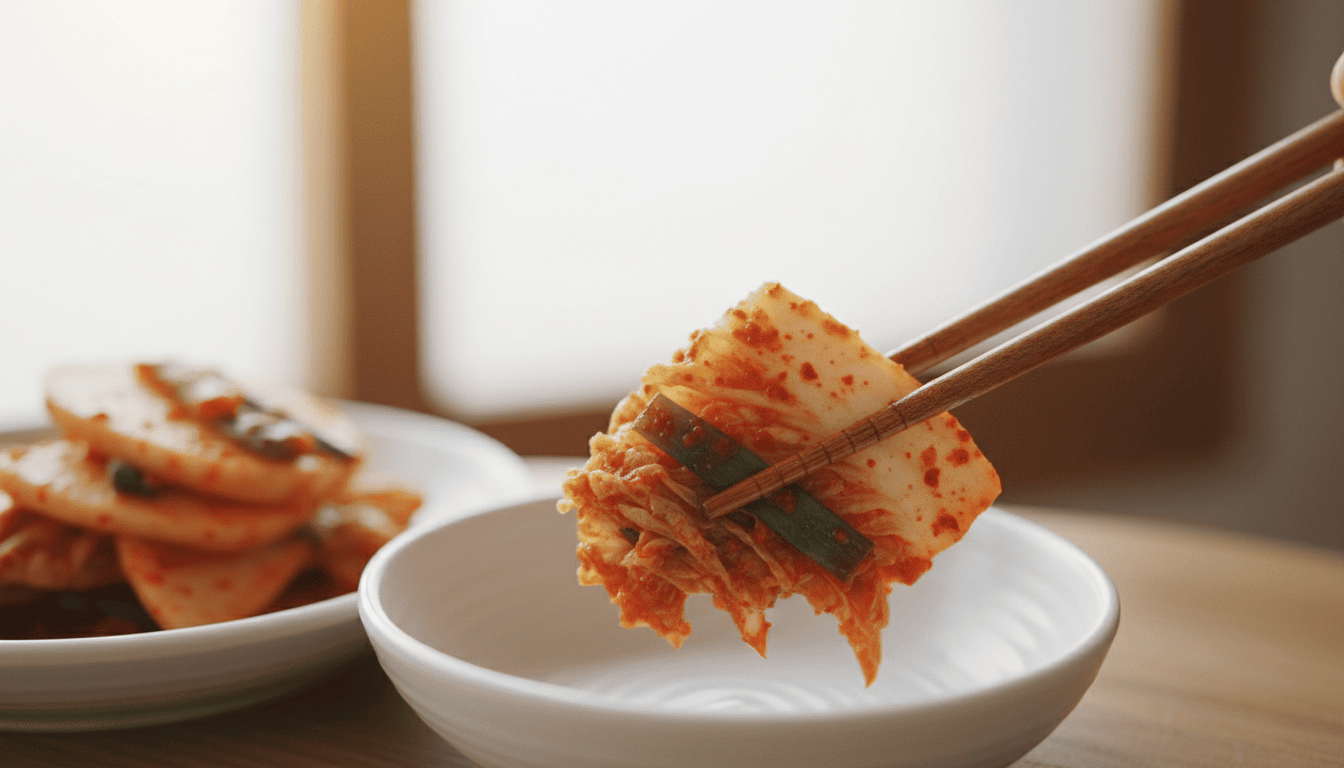
Here’s the simplest way to picture it: kimchi is a side dish, not a main course. In Korea, it shows up as one of several small dishes next to a meal — a modest portion, maybe a few forkfuls to a small bowl, eaten alongside rice and other food. That everyday, side-dish amount is a completely reasonable daily target for most people.
I deliberately won’t hand you a precise gram figure as if it were a prescription, because the right amount genuinely depends on you — your overall diet, your salt intake, and how your body responds. But if you anchor on “a normal serving as a side, once or maybe twice a day,” you’re in sensible territory. The trouble usually starts not with daily kimchi, but with treating a salty, fermented condiment like it’s the main event on your plate.
Think in servings, not exact grams
People love the idea of an exact number, but food doesn’t really work that way. A “serving” of kimchi is a small side portion — think of what fits in a little dish next to your rice, not a heaping bowl you’d eat on its own.
The reason I steer you toward servings instead of grams is that it’s something you can actually judge at the table without a kitchen scale. If your portion looks like a reasonable side dish and not a full salad course, you’re eating it the way it’s meant to be eaten. That intuition will serve you far better day to day than trying to hit a specific weight.
Balancing kimchi with sodium in your overall diet
This is the single most important factor in “how much.” Kimchi is a salted, preserved food, so sodium is the main thing to keep an eye on when you decide how much to eat. It’s not about kimchi being uniquely salty — it’s about where it fits in the total salt of your day.
If the rest of your meals are already salty, a big daily helping of kimchi stacks on top of that. If your diet is otherwise fresh and lower in sodium, you’ve got more room. So the real question isn’t “how much kimchi in a vacuum,” it’s “how much kimchi given everything else I’m eating.” I break down the salt side of this in more detail in kimchi sodium guide, which is worth a read if sodium is a concern for you.
Building tolerance: start small and adapt
If kimchi is new to you, your daily amount should start smaller and grow over time. A gut that isn’t used to fermented, fibrous, spicy food may need a little runway to adapt — and easing in tends to feel a lot better than diving straight into large portions.
There’s no rush here. Begin with a modest side portion, see how you feel, and let your daily amount settle naturally over days and weeks. People who’ve eaten kimchi their whole lives handle bigger portions comfortably in part because their bodies adapted long ago. If you’re earlier in that journey, honor where you are rather than copying someone else’s plate.
Signs you might be eating too much
Your body gives you feedback. Rather than obsessing over numbers, learn to read the signals that you’ve pushed the amount higher than suits you.
- Feeling puffy or retaining water. This often points to the sodium load, especially if the rest of your day was salty too.
- More bloating or gas than usual. A fermented, cabbage-based food naturally keeps your gut busy, and larger portions tend to amplify that.
- Digestive discomfort from the spice or acidity. Very sour or spicy kimchi in large amounts doesn’t sit well with everyone.
None of these are alarms — they’re just your cue to scale the portion back to a comfortable side-dish amount. If any discomfort is significant or persistent, that’s a conversation for a healthcare professional, not something to troubleshoot from a blog.
It depends on you — and that’s the honest answer
I know “it depends” isn’t as satisfying as a hard number, but it’s the truthful answer, and truthful is what you want from a doctor. Your ideal daily amount depends on your overall diet, your sodium intake, your tolerance for fermented and spicy food, and any health considerations specific to you.
For most healthy people, a normal side-dish serving once or twice a day is a perfectly sensible way to enjoy kimchi regularly. If you have a condition where sodium or other factors matter — say, if you’re watching your salt for medical reasons — the right amount for you is a question for your own healthcare professional, who knows your situation. This article is general guidance, not medical advice.
FAQ
Is it okay to eat kimchi every day?
For most healthy people, a normal side-dish serving daily is a reasonable way to enjoy it. The main thing to watch is total sodium across your whole diet, not kimchi in isolation. If you have salt-sensitive health concerns, check with your healthcare professional.
How much kimchi is too much in one day?
There’s no universal cutoff, but signs you’ve overdone it include feeling puffy, extra bloating, or digestive discomfort. Those are cues to scale back to a modest side portion rather than a hard number to memorize.
Should I eat kimchi with meals or on its own?
Kimchi shines as a side alongside rice, protein, and other foods. Eating it with a balanced meal — rather than a big pile on an empty stomach — tends to feel gentler and reflects how it’s traditionally eaten.
This article is for general information and describes fermented food in a general-wellness (structure-function) sense. It is not medical advice and does not diagnose, treat, prevent, or cure any condition. Talk to a healthcare professional about your individual needs.