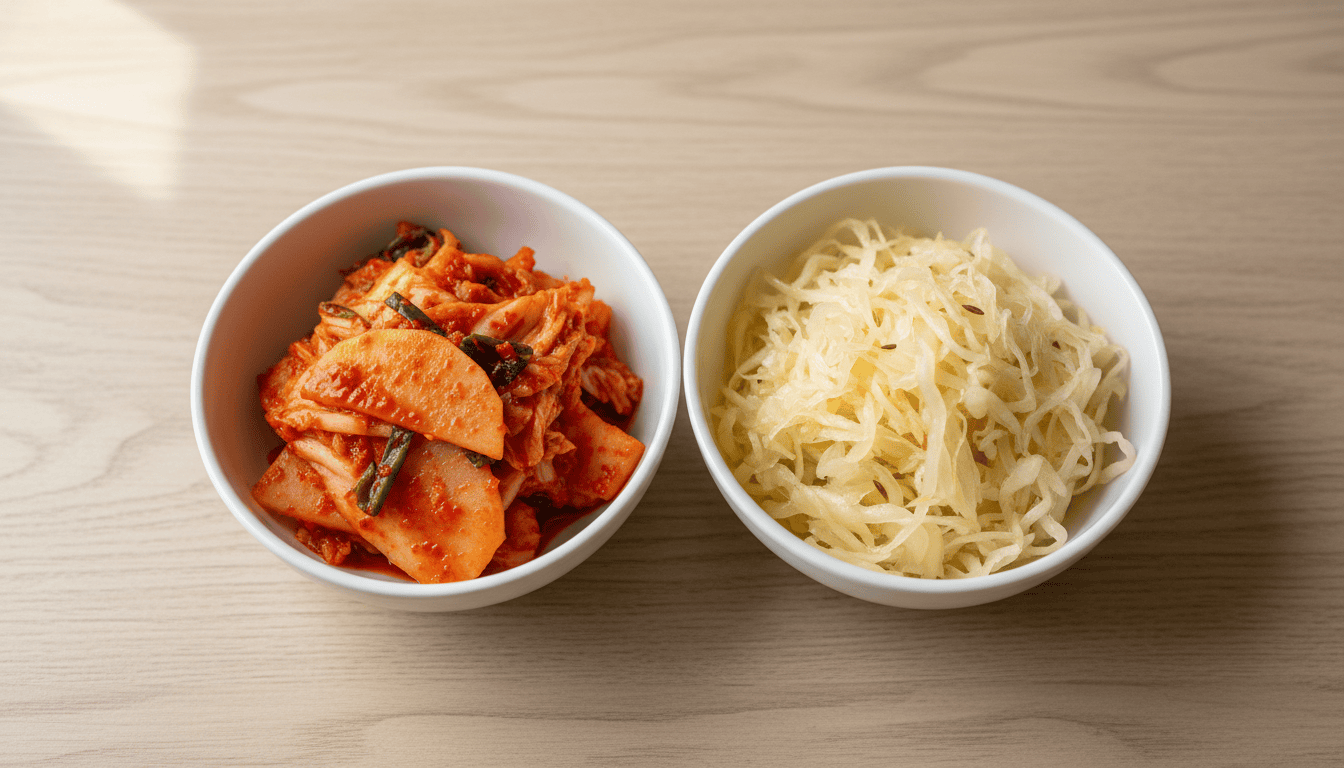
Both are cabbage. Both are fermented. Both show up on wellness lists as “good for your gut.” So when people ask me whether they should reach for kimchi or sauerkraut, they’re usually surprised that my answer starts with “it depends on what you want.” I grew up eating kimchi at every meal and trained as a doctor in Korea, and I still keep a jar of sauerkraut in my fridge here in the US. They’re cousins, not twins. Here’s an honest, side-by-side look at what each one actually does for your gut — and where the real differences are.
Kimchi vs sauerkraut: the short answer first
If you want the quick version: both are fermented vegetables that can support a healthy gut, mostly because live fermentation and fiber tend to be good company for your microbiome. Neither is a miracle food, and neither “fixes” anything on its own.
The differences come down to a few things — what goes into them, how they’re fermented, and how much of the good stuff survives to your plate. Sauerkraut is simpler: cabbage and salt. Kimchi is a whole recipe — napa cabbage, radish, garlic, ginger, scallion, and gochugaru (Korean red pepper flakes) — so it brings more variety to the table. That variety is where a lot of the interesting differences start.
How each one is fermented
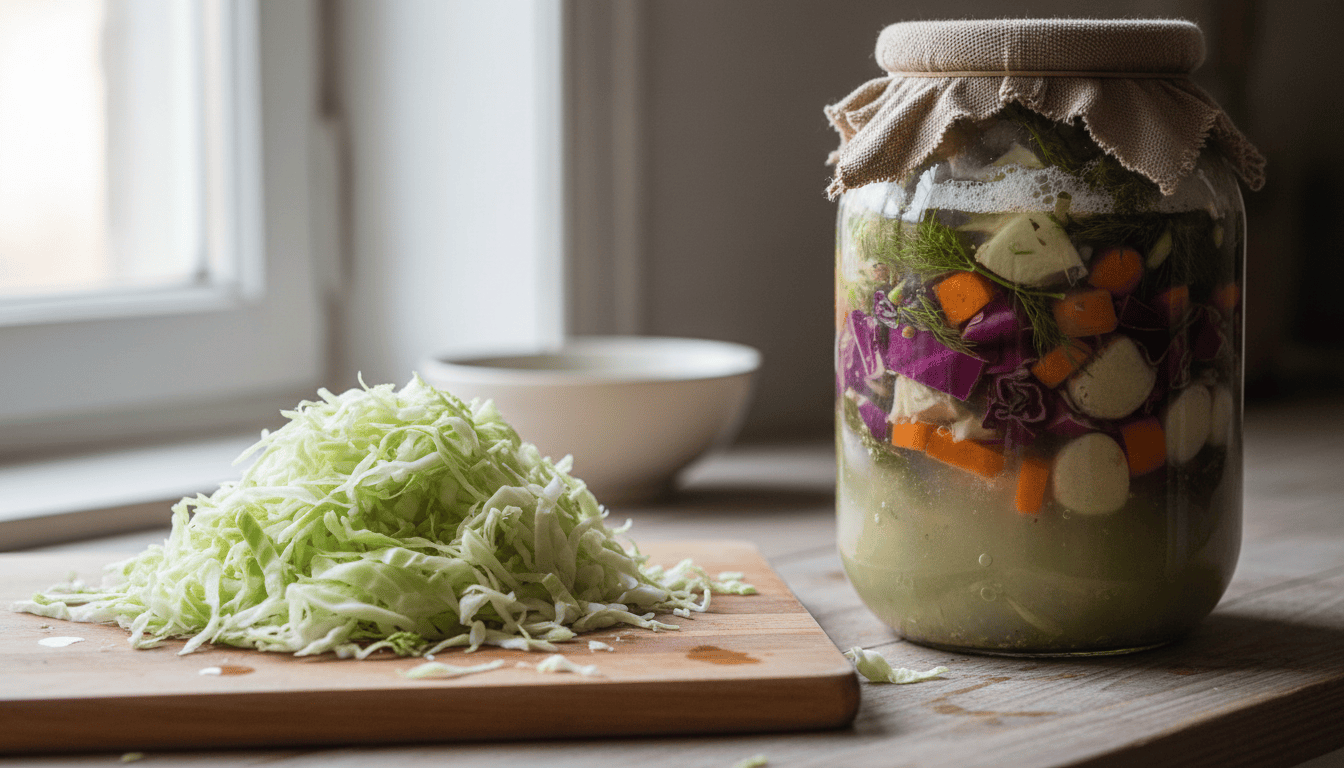
Both foods rely on the same basic magic: lacto-fermentation. Salt pulls water out of the cabbage, and naturally present lactic acid bacteria (mostly Lactobacillus and its relatives) get to work, turning sugars into lactic acid. That acid is what makes both foods tangy and helps preserve them.
Sauerkraut keeps it minimal — shredded cabbage packed with salt, left to ferment. Kimchi ferments a mix of vegetables plus aromatics and pepper, so the microbial community that develops is a bit more complex. In Korean home cooking, kimchi is often fermented cold and slow, which shapes its flavor and its bacteria over time. Same principle, different cast of characters.
What the microbes actually do
Here’s the honest science: fermented foods are associated with greater microbiome diversity, and diversity is generally considered a marker of a healthy gut. Some research on fermented foods has linked them to better microbial variety and lower markers of inflammation. That’s promising — but “associated with” is not “cures,” and I won’t pretend otherwise.
The live bacteria in kimchi and sauerkraut aren’t the same strains you’d get from a probiotic capsule, and not all of them survive stomach acid. Think of these foods less as a targeted medicine and more as a steady, food-based way to feed and vary your gut community. Both do that. Kimchi’s wider ingredient list may bring a slightly broader mix, but the everyday habit matters more than the exact head-count.
Fiber, aromatics, and the extras
This is where kimchi’s longer ingredient list earns its keep. Garlic, ginger, scallion, and radish each add their own plant fibers and compounds. Garlic and onion-family vegetables, for example, contain prebiotic fibers — the kind of fiber that feeds beneficial gut bacteria.
Sauerkraut still delivers cabbage fiber and vitamin C, and its simplicity is a genuine advantage if you’re sensitive to spice or garlic. But if you’re asking which one brings more variety of plant material to your gut, kimchi usually wins on ingredients alone. More different plants, in general, tends to be a good thing for microbiome diversity.
Sodium, spice, and who should be careful
Now the trade-offs, because they’re real. Both are salty — salt is how they ferment — so if you’re watching your sodium for blood pressure or on medical advice, portion size matters more than which one you choose. A modest side-dish amount, not a bowlful, is the sensible way to enjoy either.
Kimchi also brings heat from gochugaru. For most people that’s fine and even part of the appeal, but if chili irritates your stomach or you have reflux, sauerkraut’s mildness may sit easier. If you have a specific condition — hypertension, kidney concerns, or a doctor telling you to limit salt — check with them before making either a daily habit. I go into portion detail more in is kimchi good for gut health if you want the fuller picture on kimchi specifically.
So which should you eat?
Honestly? The best one is the one you’ll actually eat regularly. Consistency beats optimization here.
- Choose kimchi if you want more variety, don’t mind spice, and like bolder flavor with your meals.
- Choose sauerkraut if you prefer something mild, simple, and easy to add to sandwiches or a plate without much thought.
- Or rotate both — there’s no rule that says you pick a side. Different ferments, different plants, more variety for your gut.
Whichever you pick, buy the refrigerated, unpasteurized kind (or make it yourself) so the bacteria are alive, start with small portions, and let your taste and your stomach guide you.
Frequently asked questions
Does kimchi have more probiotics than sauerkraut?
Not necessarily “more” in a way you can count on a label. Kimchi’s wider ingredient mix can support a more varied microbial community, but exact live counts vary batch to batch for both. Freshness and whether it’s unpasteurized matter more than the food’s name.
Is one better for weight or bloating?
Neither is a weight-loss food, and I’d be skeptical of anyone who says otherwise. Both are low in calories and high in fiber, which can help you feel full. Some people find fermented foods ease digestion; others find the salt or spice bothersome. Listen to your own body.
Can I eat them every day?
Many people do, in modest amounts. The main thing to watch is sodium. A small daily side-dish portion is reasonable for most healthy adults, but if you have blood pressure or kidney concerns, ask your doctor first.
This article is general wellness information and is not medical advice. It does not diagnose, treat, or prevent any condition. If you have a health condition or dietary restriction, talk with your doctor or a registered dietitian before making changes.