If you’ve started eating kimchi for your gut and then paused to wonder, “wait — how much salt am I actually eating here?”, that’s a fair question, and a smart one. I’m a Korean-trained doctor who grew up eating kimchi at every meal, so let me give you the plain version: kimchi is salty, the salt is doing a real job, and for most people it’s manageable once you know the numbers and a few simple habits. Let’s walk through the kimchi sodium question without the scare tactics.
How much sodium is actually in kimchi?
Salt isn’t an accident in kimchi — it’s the engine. The cabbage gets salted first to draw out water and create the environment where the right bacteria can ferment it safely. No salt, no kimchi.
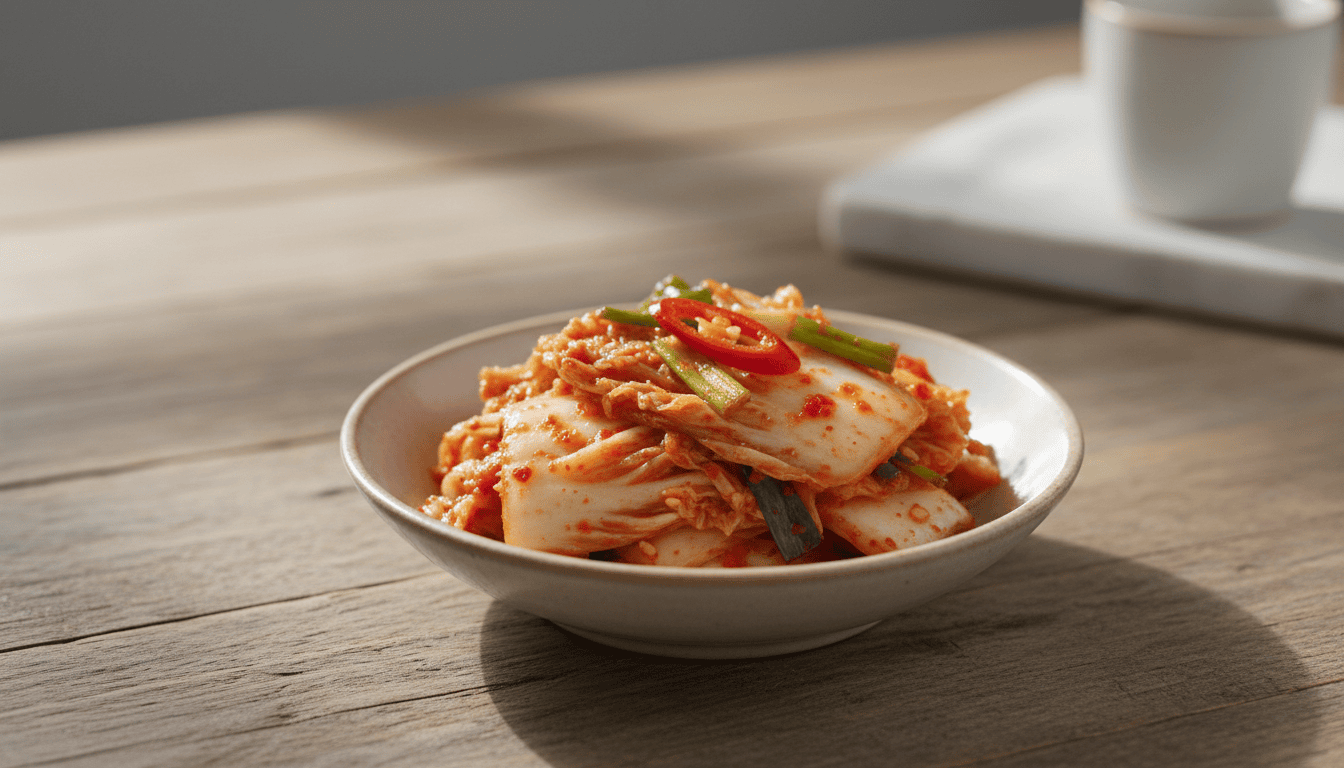
So how much are we talking about? It varies a lot by recipe and brand, but a typical serving of kimchi — figure a modest side-dish portion, not a heaping bowl — lands somewhere in the low-to-mid hundreds of milligrams of sodium. A larger, more generous portion can climb higher, and store-bought kimchi can differ meaningfully from homemade. The honest takeaway isn’t a single magic number; it’s that kimchi is a *concentrated, salty* food eaten in *small amounts*. The portion is the whole story.
For context, U.S. dietary guidance suggests keeping sodium under about 2,300 mg a day for most adults. A normal serving of kimchi is a slice of that budget, not the whole thing — unless kimchi is one of several salty foods stacking up across your day.
Is that a problem? The honest answer
Here’s where I want to be straight with you, because this is exactly the kind of question where wellness content tends to either panic or hand-wave.
For most healthy people eating kimchi the way it’s traditionally eaten — a small side dish alongside a larger meal — the sodium is not something to lose sleep over. The gut benefits of a fermented vegetable are real and don’t get erased by the salt; both things are simply true at the same time.
But I won’t pretend the salt is nothing. Sodium is worth being aware of, especially if you’re eating kimchi in big portions, every meal, on top of an already salty diet. The trade-off is real, and naming it honestly is part of my job. What kimchi’s salt does *not* do is turn a healthy food into an unhealthy one. It just means portion and context matter — the same as with any concentrated, flavorful food.
Who should pay closer attention
This is the part a real doctor owes you. Some people do need to keep a closer eye on sodium, and for them kimchi deserves a little more thought — not avoidance, just attention.
If you’ve been told to watch your blood pressure, or you’ve been advised to follow a lower-sodium eating pattern, the salt in kimchi counts toward your daily total and shouldn’t be ignored. Kimchi isn’t uniquely dangerous here; it’s simply salty, like many foods you already track. If a clinician has given you a specific sodium target, that guidance comes first, and this article doesn’t replace it. The right move is to fit kimchi into your plan, not to treat it as an exception to it.
For everyone else, the message is calmer: enjoy it, and just be portion-aware.
How to enjoy kimchi without the salt worry
The good news is that you have a lot of control here, and none of it requires giving up flavor. A few plain habits:
- Mind the portion. This is the biggest lever by far. A couple of forkfuls as a side dish is the traditional way to eat kimchi, and it keeps the sodium modest almost automatically. The problem is rarely kimchi itself — it’s the bowlful.
- Balance the rest of the plate. If kimchi is your salty player at a meal, let the other dishes be gentler on salt. Sodium is a daily budget, not a single-food scorecard.
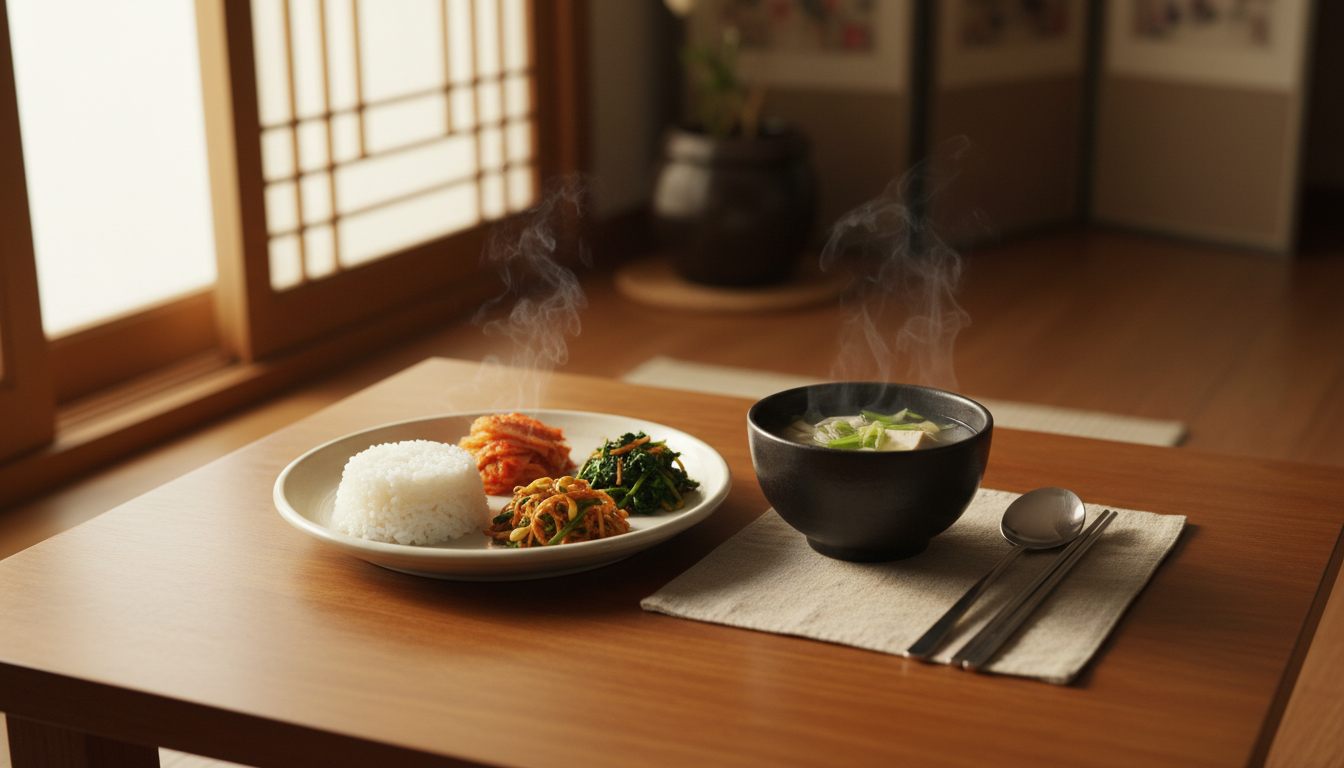
- Pair it with potassium-rich foods. Vegetables and fruits that bring potassium help balance sodium’s effects in the body for most people. Kimchi already sits naturally alongside rice and vegetables in Korean meals — that pairing is doing quiet work.
- Watch the labels on store-bought jars. Sodium per serving varies widely between brands. If you’re comparing, the nutrition label tells you more than the marketing does.
Does rinsing kimchi lower the sodium?
People ask this a lot, so here’s the straight answer: yes, rinsing kimchi under water can wash off some of the surface salt and seasoning, and it does modestly lower the sodium. If you’re being careful about salt, it’s a legitimate trick.
But know the trade-off. Rinsing also rinses away flavor and some of the beneficial live cultures and byproducts that sit in that seasoned brine — the very things that make raw, unpasteurized kimchi good for your gut in the first place. So rinsing is a reasonable tool if sodium is a real concern for you, but it’s not a free lunch. For most people, adjusting the *portion* gets you most of the benefit without washing away what makes kimchi worth eating. If you’re weighing the gut side of this, I laid out whether kimchi is actually good for your gut, and what the fermentation really does in a separate piece.
FAQ
Is the sodium in kimchi bad for you?
Not for most people in normal portions. Kimchi is salty, but a side-dish serving is a modest part of your daily sodium. It matters more if you eat large amounts often or have been told to limit sodium.
How can I lower the sodium in kimchi?
The simplest way is a smaller portion. Rinsing off some surface salt helps too, though it also washes away flavor and some live cultures. Balancing the rest of your meal matters just as much.
Can I eat kimchi every day with high blood pressure?
That’s a question for you and your own doctor, since your overall sodium target comes first. Kimchi can often fit into a lower-sodium pattern in small portions, but your clinician’s guidance should lead.
Is homemade kimchi lower in sodium than store-bought?
It can be, because you control the salt — but not automatically. Store-bought brands vary widely, so the label is your best guide when you’re comparing.