Most people who decide to “eat more fiber” start with a vague plan — more salad, maybe some oatmeal — and a week later they can’t tell whether anything changed or how much they actually ate. The useful questions are narrower: which foods carry real fiber per serving, what the daily target actually is, and how to work it into meals already on the table without overhauling your diet. That’s what’s below — gram counts per portion you’d actually eat, the difference between the two kinds of fiber and why it matters for how you feel, and the pacing mistake that turns a good change into a bloated, miserable week.
Why Fiber Is the One Nutrient Your Gut Bacteria Actually Eat
Fiber is the only part of your food that reaches your large intestine more or less intact — and that’s the whole point. Your small intestine breaks down protein, fat, and most carbohydrates and absorbs them long before they get that far. Fiber doesn’t have the enzymes working against it, so it arrives in the colon still recognizable, right where the tens of trillions of bacteria living there are waiting.
Those bacteria ferment it. That word gets thrown around loosely in wellness writing, but here it means something specific, and it’s the same process I grew up watching in a jar on my grandmother’s back porch: microbes eating carbohydrates they can break down and producing new compounds as a byproduct. In the colon, the main byproducts are short-chain fatty acids — mostly acetate, propionate, and butyrate. Butyrate gets the most research attention, because it’s a preferred fuel source for the cells lining your colon. Those cells run on something your gut bacteria made out of the fiber you ate that morning. That’s not a metaphor for “gut health.” That’s the mechanism.
Which is why fiber behaves differently from almost everything else on a nutrition label. Protein and vitamins are things you absorb. Fiber is something you deliver. If you don’t send enough down, the population that depends on it runs short, and some of those bacteria will turn to the mucus layer along your intestinal wall for fuel instead. It’s a well-documented shift in animal research, and it’s part of why the “feed them or they’ll find something else to eat” framing has caught on among gastroenterologists. I’d stop short of claiming a specific health outcome from it — the human evidence is still developing — but it explains why the food you eat and the bacteria you host aren’t two separate subjects.
The practical problem is that most Americans aren’t sending much down. The FDA sets the Daily Value for dietary fiber at 28 grams for a 2,000-calorie diet, which is the number behind every nutrition label you’ve read. The Dietary Guidelines for Americans, published jointly by USDA and HHS, identifies dietary fiber as a nutrient of public health concern precisely because intake sits well below recommended levels across most age groups. This isn’t a niche optimization for people chasing perfect health. It’s a gap in the standard American diet, and the standard American diet includes most of us.
One more thing before you look at any food list: fiber isn’t a single substance. It’s a category — a whole set of plant carbohydrates with different structures, and your gut bacteria don’t treat them interchangeably. The oats in your breakfast and the skin on an apple are doing different jobs down there. That distinction decides which foods to reach for depending on what you’re actually trying to change.
How Much Fiber Do You Actually Need Per Day?
For most adults the working target is roughly 25 to 38 grams a day, and the number worth memorizing is 28 — the FDA’s Daily Value on a 2,000-calorie diet, so it’s the figure every nutrition label is quietly measuring your food against. Eat fewer calories than that and your target scales down; eat more and it scales up.
There’s a range rather than one number because the underlying recommendation is calorie-based, not one-size-fits-all. The Dietary Guidelines for Americans frames adequate fiber intake at about 14 grams per 1,000 calories consumed. Run the math and you get the familiar spread: an adult eating 1,800 calories lands near 25 grams, someone eating 2,700 lands closer to 38. That’s where the “25 for women, 38 for men” shorthand comes from — it’s a proxy for calorie intake, not a statement about biology. If you’re a small-framed man eating 1,900 calories, 25 is your realistic number. If you’re a tall woman training six days a week, 38 might be.
What the range looks like in practice
Rather than memorize a chart, anchor on three checkpoints:
- Around 25 g — a reasonable floor for most adults eating a moderate-calorie diet.
- 28 g — the label reference. Useful because you can read percentages off packaging against it.
- Around 38 g — the upper end of typical adult recommendations, for people eating more calories.
Older adults are the one group worth flagging separately, and not because the biology changes much. Calorie intake tends to drop with age, so the gram target drops with it. The trouble is that appetite, medications, and reduced fluid intake often move in the same direction at once, which is why fiber intake in this group frequently ends up below even the lowered target. Worth watching in yourself or a parent — though what to do about it depends enough on the individual that it belongs with a doctor who knows the whole picture.
The gap between the target and reality
Federal dietary intake surveys have consistently put average American fiber consumption in the mid-teens of grams per day. Call it roughly half the target.
Let me be careful about what that does and doesn’t mean. It doesn’t mean everyone eating 15 grams is unwell — plenty of people are fine. It means that if you’ve never tracked this, the odds are you’re somewhere in the teens, not somewhere in the twenties. Most people I talk with guess high. They picture the salad at lunch and the apple in the afternoon and assume they’re at 25. A salad and an apple, realistically, is around 7 or 8 grams.
That’s the useful reframe: you’re probably not adding 3 grams to a nearly complete day. You’re closing a 10-to-15-gram gap. Which sounds daunting until you see what one cup of lentils or one cup of raspberries contributes — because a gap that size usually closes with two or three changes, not thirty.
Do you need to count?
No, and I’d argue against it as a permanent habit. But counting for three days, once, is worth the effort. Write down what you eat, look up the fiber, total it. Almost everyone I’ve suggested this to comes back surprised — usually because they find out their bread contributes almost nothing, or that one meal is carrying their entire daily total.
After those three days you’ll have something better than a number: a sense of which of your regular meals are dead weight and which are already pulling their share. That’s the real decision-making tool, and it outlasts the tracking. For a closer look at how the targets shift by age and sex, and where the underlying numbers come from, see .
Soluble vs Insoluble Fiber: Which One Does What
Soluble fiber dissolves in water and forms a gel; insoluble fiber doesn’t dissolve and adds bulk. That’s the textbook line, and it’s true, but the version that changes what you put on your plate is this: soluble fiber mostly slows things down and feeds bacteria, insoluble fiber mostly moves things along. If you remember one thing, remember that the gel-forming fibers are the ones your microbes fight over.
Here’s what the gel does. Soluble fiber — beta-glucan in oats and barley, pectin in apples and citrus, the mucilage in chia seeds — pulls in water and thickens the contents of your small intestine. That slows the rate at which sugars get absorbed, which is why oatmeal produces a gentler blood sugar curve than the same calories from white toast. It also traps some bile acids and carries them out, which forces your liver to pull cholesterol from circulation to make more. The FDA considers that last effect well enough established to authorize a health claim: soluble fiber from whole oats and from psyllium husk, as part of a diet low in saturated fat and cholesterol, may reduce the risk of heart disease. That’s a rare, narrowly worded authorization, and it applies to the soluble fraction — not to fiber in general.
Insoluble fiber works mechanically. Wheat bran, the skins on vegetables and fruit, the fibrous strands in celery — these hold their structure, add weight and volume to stool, and shorten the time it takes to travel through the colon. Less fermentation, more physics. If you’re dealing with sluggish, hard-to-pass stools, this is generally the fraction that matters most. The honest caveat is that constipation has plenty of causes fiber doesn’t touch, and how much water you’re drinking alongside it changes the result considerably. If that’s your main concern, the food-by-food breakdown lives in .
Where soluble fiber concentrates
- Oats and barley — beta-glucan, the most-studied soluble fiber in the American diet
- Beans, lentils, and chickpeas — a substantial soluble fraction on top of their overall fiber load
- Apples, pears, and citrus — pectin, concentrated in the flesh and the pith
- Chia and flaxseed — mucilage; the reason chia turns a glass of water into pudding
- Psyllium husk — the most soluble of the common sources, and the one behind most bulk-forming supplements
Where insoluble fiber concentrates
- Wheat bran and whole wheat — the classic insoluble source
- Vegetable skins and stalks — potato skins, broccoli stems, the outer leaves of cabbage
- Nuts and seeds — the cell walls, mostly
- Brown rice, popcorn, and other intact whole grains
- Leafy greens — kale, collards, and the crunchy ribs people usually trim off
Almost everything has both
This is the part that dissolves the whole debate. Real foods aren’t sorted into two bins. A cup of black beans delivers both fractions. So does an apple — pectin in the flesh, insoluble fiber in the skin, which is a decent argument against peeling it. Napa cabbage, the base of most kimchi, is largely insoluble, but the fermentation that happens before you eat it changes the texture and partially breaks down some of those cell walls. It doesn’t convert one type into the other, and I wouldn’t claim it does. It’s a reminder that food processing sits between the label and your colon.
Because of that overlap, US nutrition labels aren’t required to break out soluble and insoluble grams separately. You’ll see “Dietary Fiber,” and sometimes “Soluble Fiber” listed voluntarily on oat products, since that’s where the health claim lives. For everything else, you’re inferring from the food itself.
Which leads to the rule I’d actually give someone: don’t try to hit a soluble target and an insoluble target. Eat across categories — a legume, an intact whole grain, fruit with the skin on, vegetables with the stems included — and the ratio takes care of itself. The people who run into trouble aren’t the ones with a suboptimal split. They’re the ones getting all their fiber from a single source, usually a supplement or one breakfast cereal, wondering why the results are underwhelming.
The High Fiber Foods Chart: Grams Per Real Serving
Legumes are the highest-fiber foods most Americans will realistically eat, at 12 to 19 grams per cooked cup — one serving covering roughly half a day’s target. Everything below is organized by grams per portion a person actually eats, not per 100 grams, because nobody eats 100 grams of chia seeds and comparing foods that way makes seeds look like they’d solve everything. All values are approximate, drawn from USDA FoodData Central and rounded; brands and cooking methods move them a gram or so in either direction.
Beans, lentils, and peas
| Food | Serving | Fiber (approx.) |
|---|---|---|
| Navy beans, cooked | 1 cup | 19 g |
| Split peas, cooked | 1 cup | 16 g |
| Lentils, cooked | 1 cup | 15.5 g |
| Black beans, cooked | 1 cup | 15 g |
| Kidney beans, cooked | 1 cup | 13 g |
| Chickpeas, cooked | 1 cup | 12.5 g |
| Green peas, cooked | 1 cup | 9 g |
| Edamame, shelled | 1 cup | 8 g |
Nothing else on this page competes. A cup of lentils in a soup does more for your daily total than an entire day of careful vegetable choices. Canned counts — rinse them, since canned beans carry meaningful sodium, but the fiber survives the can.
Whole grains
| Food | Serving | Fiber (approx.) |
|---|---|---|
| Bulgur, cooked | 1 cup | 8 g |
| Barley, pearled, cooked | 1 cup | 6 g |
| Quinoa, cooked | 1 cup | 5 g |
| Oats, rolled, dry | ½ cup | 4 g |
| Brown rice, cooked | 1 cup | 3.5 g |
| Popcorn, air-popped | 3 cups | 3.5 g |
| Whole wheat bread | 1 slice | 2 g |
The bread line surprises people. Two slices of legitimate whole wheat bread gets you 4 grams — respectable, but not the fiber anchor most people assume. And “wheat bread,” “multigrain,” and “made with whole grains” on the front of a package mean very little. Read the label; if the first ingredient isn’t whole wheat flour, you’re probably closer to 1 gram a slice.
Vegetables
| Food | Serving | Fiber (approx.) |
|---|---|---|
| Artichoke, cooked | 1 medium | 7 g |
| Broccoli, cooked | 1 cup | 5 g |
| Brussels sprouts, cooked | 1 cup | 4 g |
| Sweet potato, with skin | 1 medium | 4 g |
| Carrots, raw | 1 cup chopped | 3.5 g |
| Kale, cooked | 1 cup | 3 g |
| Kimchi | 1 cup | 2 g |
I include kimchi mostly to set expectations honestly. It’s a fermented food with a real case for the microbiome side of this conversation, but as a fiber source it’s a side dish, not a strategy — Koreans eat it in small amounts at every meal, and those amounts add up across a day rather than in one sitting. And note the artichoke at the top: one of the highest-fiber vegetables in the American grocery store, and one almost nobody buys.
Fruit
| Food | Serving | Fiber (approx.) |
|---|---|---|
| Avocado | 1 whole | 10 g |
| Raspberries | 1 cup | 8 g |
| Blackberries | 1 cup | 7.5 g |
| Prunes | ½ cup | 6 g |
| Pear, with skin | 1 medium | 5.5 g |
| Apple, with skin | 1 medium | 4.5 g |
| Orange | 1 medium | 3 g |
| Banana | 1 medium | 3 g |
Raspberries and blackberries are the outliers — most fruit lands in the 3-to-5 gram range, and berries roughly double it because you’re eating the seeds and the structural tissue along with the flesh. The peel matters too: an apple loses about a third of its fiber if you peel it.
Nuts and seeds
| Food | Serving | Fiber (approx.) |
|---|---|---|
| Chia seeds | 2 Tbsp | 8 g |
| Ground flaxseed | 2 Tbsp | 4 g |
| Almonds | 1 oz (~23 nuts) | 3.5 g |
| Sunflower seeds | 1 oz | 3 g |
| Pistachios | 1 oz | 3 g |
| Peanuts | 1 oz | 2.5 g |
Chia is the one genuine shortcut on this page — 8 grams for two tablespoons you can stir into yogurt without changing the meal. Flaxseed only counts if it’s ground; whole flaxseeds tend to pass through intact.
What the numbers actually tell you
Look across all five tables and a pattern shows up. That 10-to-15 gram gap between typical American intake and the target closes with one legume serving, or with two or three mid-range items — a cup of raspberries at breakfast, half an avocado at lunch, broccoli at dinner. It does not require thirty small changes.
The other pattern is where fiber isn’t. Meat, fish, eggs, dairy, and oils contain zero. Refined grains contain almost none. If a meal is built entirely from those categories — which describes a lot of American dinners — no amount of careful choosing within it will help. The fiber has to come from something you add.

Variety Beats a Perfect List: The 30-Plants-a-Week Idea
Aim for 30 different plant foods across a week — not thirty servings, thirty distinct species. It’s the most useful reframe I know for people who’ve read a fiber chart and still don’t know what to buy, because it swaps an optimization problem for a counting game, and because the research points toward diversity mattering on its own, separate from total grams.
The number comes from the American Gut Project, a large citizen-science microbiome cohort run out of UC San Diego. In its published analysis, participants who reported eating more than 30 different plant types per week had more diverse gut bacterial communities than those eating 10 or fewer. Two caveats deserve emphasis. It’s observational — people who eat 30 plants a week differ from people who eat 10 in a hundred other ways, and the study design can’t separate those out. And “30” isn’t a biologically derived threshold; it was a cutoff in the data, not a number anyone tested against 25 or 35. Treat it as a well-motivated target, not a prescription.
That said, it fits what we understand about how the gut community works. Different fiber structures get broken down by different bacterial species, each carrying its own set of enzymes. A gut fed only on wheat is feeding a narrower slice of that population than a gut fed on wheat, oats, lentils, cabbage, and almonds. Same grams, different guests at the table.
How to count
The rules are looser than people expect, which is what makes this workable:
- Each species counts once per week. Eating black beans four times still counts as one plant.
- Different species in the same category count separately. Black beans, chickpeas, and lentils are three.
- Herbs and spices count. Cilantro, garlic, ginger, cinnamon, gochugaru (Korean red pepper flakes) — each one.
- Nuts, seeds, and whole grains count. Almonds, walnuts, sunflower seeds, oats, barley, brown rice.
- Coffee, tea, and dark chocolate count, since they’re plant-derived and carry polyphenols, though you shouldn’t build your total on them.
- Colors of the same species count once. Red and green bell peppers are the same plant.
Someone who eats reasonably well is usually already at 15 to 20 without trying. The target isn’t a transformation — it’s finding ten more.
Where the last ten usually come from
The easiest wins require no new cooking. A bag of frozen mixed vegetables can add four or five species to a single dinner. A trail mix or mixed-nut container adds three or four. A can of mixed beans instead of one kind. Rotating brown rice, quinoa, and barley across the week instead of defaulting to one. Buying two kinds of berries instead of a double portion of one.
The other underused category is what Americans think of as garnish. A tablespoon of chopped scallions, a sprinkle of sesame seeds, fresh parsley on a soup — small amounts nutritionally, but each is a species, and each brings its own polyphenols along with the fiber.
This is where Korean home cooking has an accidental structural advantage, and it’s worth borrowing even if you never cook a Korean meal. A typical dinner comes with banchan — small vegetable side dishes, usually four or five, set out alongside the main course. Seasoned spinach, bean sprouts, sliced radish, braised burdock root, kimchi. Nobody designed that for microbiome diversity; it’s just how the table is set. But one ordinary weeknight dinner might contribute six or seven distinct plants instead of the two a typical American dinner plate does. My grandmother would have found the phrase “plant diversity” ridiculous. She just didn’t think a meal was finished with one vegetable on it.
You don’t need the Korean version. You need the principle: more small portions of different things beats one large portion of the same thing. A plate with a half-cup each of three vegetables does more for the count than a full cup of one.
Don’t let it become another scoring system
One honest caution. I’ve watched people turn this into a weekly tally they feel bad about missing, and that’s a worse outcome than not counting at all. Try it for two or three weeks — long enough to notice which of your habits are narrow — then let the number go. The lasting benefit isn’t the tracking. It’s that you stop buying the same eight vegetables on autopilot.
Fiber is also only one reason variety helps. Fermented foods bring live microbes into the picture, and prebiotic foods carry specific compounds that feed particular bacterial groups — a related but distinct topic, covered in .
Adding Fiber Without Rebuilding Your Diet: Swaps That Stick
The fastest route to 25-plus grams is replacing three things you already eat, not bolting a new health routine onto your week. A swap survives because it costs nothing — no extra decision, no extra shopping trip, no new dish to learn. An addition has to be remembered every single day, which is why most of them last about nine days.
Below are the ones I’ve seen actually hold, with roughly what each one moves you, using the numbers from the chart above.
Breakfast
Breakfast is where the biggest single-move gains live, because the American default — cereal, toast, an egg sandwich, coffee — often contributes under 3 grams.
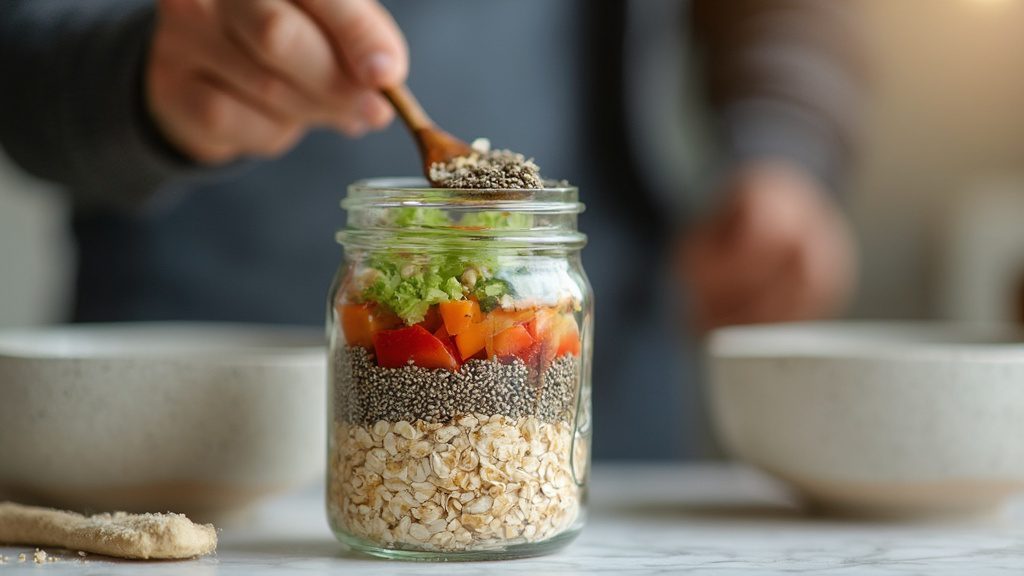
- Two tablespoons of chia into whatever you’re already eating. Yogurt, oatmeal, a smoothie. +8 g, and it takes four seconds. Highest-return change on the page.
- Berries instead of banana. A cup of raspberries over a sliced banana: +5 g for the same bowl.
- Rolled oats instead of instant flavored packets. About the same fiber, far less sugar, better satiety — and half a cup dry gives you 4 g as a base to build on.
- Whole wheat toast, checked at the label. If your current bread lists enriched flour first, switching to real whole wheat is +2 g for two slices with zero behavior change.
Stack chia onto oats with berries and breakfast alone lands near 17 grams. Most of the gap, closed before you leave the house.
Lunch and dinner
The principle here is to put a legume into a dish that already exists rather than building a dish around one.
- Half a cup of lentils into pasta sauce. They disappear into a red sauce and add +8 g across the pot. Nobody at the table notices.
- A can of beans into soup, chili, or a grain bowl. Rinsed black beans or chickpeas: +7 to 8 g per half-cup serving.
- Barley or bulgur instead of white rice, some of the time. +3 to 5 g per cup, and barley in particular holds up well in soups.
- Half an avocado on the sandwich or salad you already make. +5 g, and it replaces mayonnaise.
- Leave the skins on. Potatoes, sweet potatoes, apples, cucumbers. This one is free — it’s a decision not to do extra work.
- Frozen mixed vegetables as a default side. Cheap, fast, and it moves the plant count and the gram count at the same time.
One note on the legume swaps: canned beans and lentils are nutritionally fine. I mention it because there’s a persistent idea that dried-and-soaked is meaningfully better. For fiber, it isn’t. Rinse the can to cut sodium and move on.
Snacks
Snacks are the easiest category to convert, because you’re already eating something — you’re just changing what.
- Air-popped popcorn instead of chips. Three cups is 3.5 g versus roughly 1 for chips, and it’s a bigger volume of food.
- An ounce of almonds or pistachios instead of crackers. +3 g, plus protein and fat that make the snack actually hold you.
- Roasted chickpeas. Crunchy, shelf-stable, around 6 g per half-cup.
- An apple or pear with the skin on. 4 to 5 g, and the least effortful item here.
- Prunes. Underrated, and yes, they’ve earned the reputation — half a cup is 6 g, with a substantial sorbitol content on top, which is why the effect is more noticeable than the gram count alone suggests.
Pick two, not ten
Here’s the part I’d underline. Look at that whole list and choose two. Not because more wouldn’t help arithmetically, but because how much fiber your system tolerates going from 15 grams to 30 in a single day is a real constraint, and ignoring it is the most common way this goes wrong.
Two swaps — say, chia at breakfast and lentils in a dinner you already make — is roughly 16 additional grams. For most people that already overshoots a comfortable first week.
For a longer list of morning options that require no cooking, see .
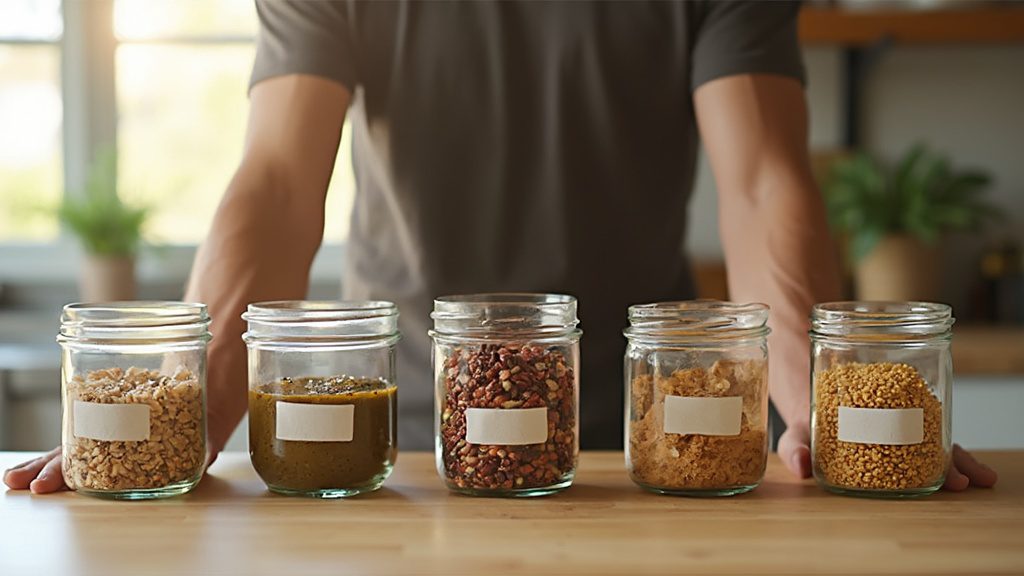
Going Too Fast: Bloating, Gas, and How to Ramp Up Sensibly
Add about 5 grams per week, not 15 in a day, and drink more water while you do it. Gas and bloating in the first week of a fiber increase are common, they’re usually a pacing problem rather than a sign something’s wrong, and they tend to settle as the bacterial population adjusts to what it’s being fed. But “tend to” is doing real work in that sentence, and the people who quit fiber entirely are almost always the ones who went from 14 grams to 32 on a Monday.
The reason follows from what fermentation produces. Along with the short-chain fatty acids, your gut bacteria generate gas — hydrogen, carbon dioxide, some methane depending on which species you host. That’s not a malfunction. It’s evidence the process is running. The issue is volume and speed: a community living on 15 grams a day that’s suddenly handed 32 produces more gas than your system is used to clearing, and the makeup of that community takes time to shift toward the species that handle the new load efficiently. Research on dietary shifts suggests the microbial community starts responding within days, though how long the full adjustment takes varies enough between people that I won’t put a number on it.
The pacing rule
- Week 1: add one swap. Roughly +5 to 8 grams.
- Week 2: hold. If it’s comfortable, add the second.
- Week 3 onward: add one more only if the previous week felt fine.
Most people reach a reasonable target in four to six weeks this way and never have a bad day. Compare that to the version where you hit 30 grams on day one, feel terrible by Wednesday, and conclude fiber doesn’t agree with you.
Water isn’t optional here. Soluble fiber works by pulling water in and forming a gel. If the water isn’t there, you’ve added bulk without the fluid that moves it — the opposite of what you were going for. I won’t give a universal ounces-per-day number, since fluid needs vary with body size, climate, activity, and medical conditions. The practical version: if you’re increasing fiber and not drinking noticeably more, you’ve done half the change.
What I see go wrong most often
Three patterns come up again and again, and all three are fixable.
The all-at-once jump. Someone reads an article like this one, buys lentils and chia and berries on Saturday, and eats all of it on Sunday. Monday is unpleasant. By Thursday they’ve decided their gut is sensitive. It usually isn’t — the change was just delivered too fast.
Psyllium without water. I flag this one specifically because it’s more than uncomfortable. Bulk-forming fiber supplements are designed to absorb fluid, and taking them with too little liquid is a documented risk for the product getting stuck in transit. Every psyllium label carries a warning about taking it with a full glass of water for exactly this reason. Read the label and follow it — this is one place where the instructions on the package are the medically important part.
All the fiber from one source. Someone adds 15 grams a day of a single supplement and wonders why they feel gassier than a friend eating 30 grams from food. Different fiber structures ferment at different rates and in different parts of the colon. One highly fermentable source concentrated in a single dose is more likely to produce noticeable gas than the same grams spread across beans, oats, fruit, and vegetables through the day. Spreading intake across meals helps for the same reason.
Some sources are also gassier than others for reasons unrelated to quantity. Beans and cruciferous vegetables — broccoli, cabbage, Brussels sprouts — contain oligosaccharides that ferment quickly and vigorously. If those specifically bother you, oats, chia, carrots, and berries are gentler entry points, and you can bring the beans in later once your baseline is higher.
Food before supplements
If you’re choosing between eating more fiber and taking a fiber supplement, start with food. Supplements deliver one type of fiber in isolation; food delivers a mix, along with the polyphenols, vitamins, and minerals attached to it. Supplements have a legitimate role — bulk-forming products are widely used and generally well tolerated — but they’re an addition to a diet, not a substitute for one, and the research on gut microbial diversity points toward variety in the diet rather than concentration in a capsule.
When it’s worth a conversation
Discomfort that fades over two or three weeks as your intake climbs is the expected pattern. Discomfort that doesn’t — or that shows up alongside things like unexplained weight loss, blood in the stool, persistent severe pain, or a sudden lasting change in bowel habits — is a different situation and belongs with your doctor rather than with a fiber chart. Same goes if you have an existing condition affecting your digestive tract, or if you take medications where timing around fiber matters; those decisions depend on details a general article can’t know.
For the specific case where constipation is the main thing you’re trying to change, and which foods and pacing tend to help there, see .
Frequently Asked Questions About High Fiber Foods
How much fiber is in a banana?
A medium banana has about 3 grams of fiber, according to USDA FoodData Central. That’s roughly 10% of the 28-gram Daily Value — respectable for one piece of fruit, but not the fiber heavyweight its reputation suggests. Bananas get associated with digestive health mostly for their potassium and for being easy on an upset stomach, not for their fiber. If you’re eating one specifically for fiber, a cup of raspberries at 8 grams or a pear with the skin on at 5.5 grams does more for the same effort.
Which foods have the most fiber per serving?
Cooked legumes lead by a wide margin. The top five by realistic serving: navy beans (19 g per cup), split peas (16 g), lentils (15.5 g), black beans (15 g), and kidney beans (13 g). After that the drop-off is steep — the highest non-legume items are chia seeds and avocado, both around 8 to 10 grams. The full breakdown by category is in the chart above, but the short version is that one cup of any cooked bean or lentil handles roughly half your daily target in a single dish.
Is a fiber supplement as good as high fiber foods?
No, though it isn’t useless either. A supplement gives you one isolated fiber type; a cup of black beans gives you multiple fiber structures plus protein, folate, magnesium, and polyphenols in the same bite. The research linking fiber to gut microbial diversity consistently points toward variety in the diet rather than concentration in a single product, which a supplement by definition can’t provide. Bulk-forming supplements are widely used and have their place — travel, a genuinely limited diet, or a specific recommendation from your own doctor — but treating one as a replacement for food is the part that doesn’t hold up.
How long until more fiber changes how I feel?
It varies more than people expect, and that variation is the honest answer. Some notice a difference in regularity within a few days; for others it takes two or three weeks, and some feel worse before better if they ramped up too quickly. Effects on satiety often show up faster than effects on regularity. Give any change at least two weeks at a steady intake before deciding whether it’s working — and if discomfort persists past that, or you’re seeing symptoms beyond ordinary gas and bloating, raise it with your doctor rather than troubleshooting from a food chart.
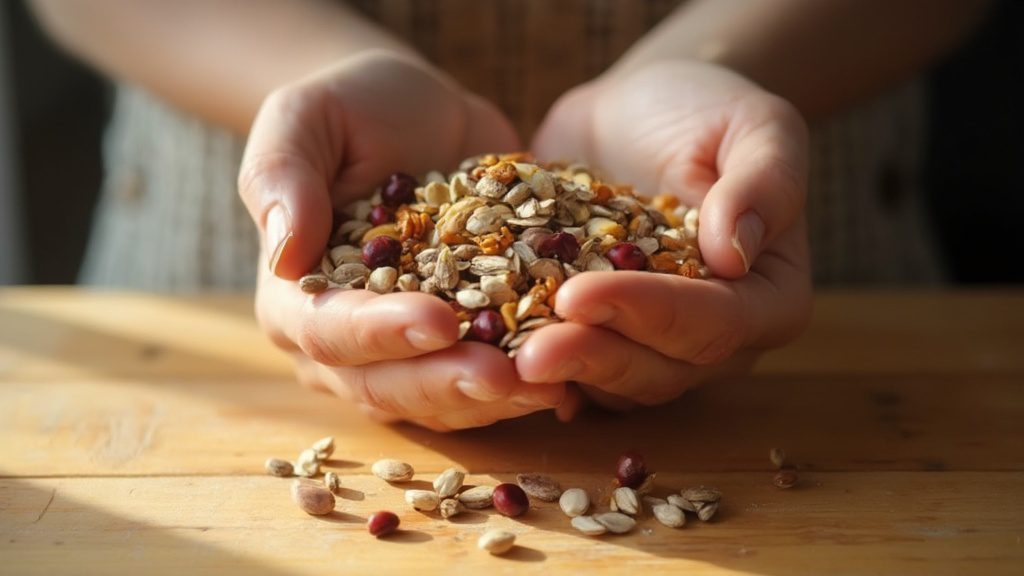
If I had to compress all of this into one sentence: you don’t need a perfect list, you need a few reliable foods and a pace your gut can keep up with. A cup of lentils, a cup of raspberries, two tablespoons of chia — those numbers are worth remembering because they do most of the work, and rotating different plants across the week matters as much as the total on any single day. Pick two swaps from the meal ideas above and hold them for a week before adding anything else; that slower ramp, with water alongside it, is the part most people skip. I grew up eating fermented vegetables at every meal, so I’ll admit the variety idea is easy for me to live with — but fiber affects everyone a little differently, and if discomfort sticks around or something feels off, that’s a conversation for your own doctor rather than a chart. If you want to go a level deeper, the pieces on how much fiber you actually need per day and prebiotic and fermented foods for gut health pick up right where this one leaves off.
함께 보면 좋은 글
- how much fiber you actually need per day
- high fiber foods chart for constipation
- prebiotic and fermented foods for gut health
- high fiber breakfast ideas that take five minutes