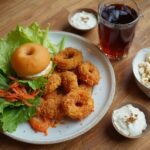
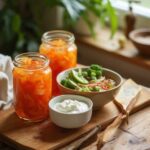
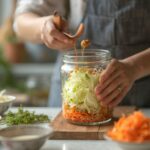
There’s a tub of dark brown paste sitting in the Korean grocery aisle, and most home cooks walk right past it because nobody has told them what it does. Or they buy one, stir a spoonful into soup expecting miso, and end up with something startlingly salty and funky. That’s doenjang — Korea’s fermented soybean paste — and it plays by different rules: fewer grains, more time, a rougher texture, and a much heavier hand on the salt. Here’s how it’s made, what separates it from miso, ssamjang, and gochujang, how much to use before it takes over a pot, and what to check on the label before a jar goes in your cart.
What Doenjang Actually Is (And How to Say It)
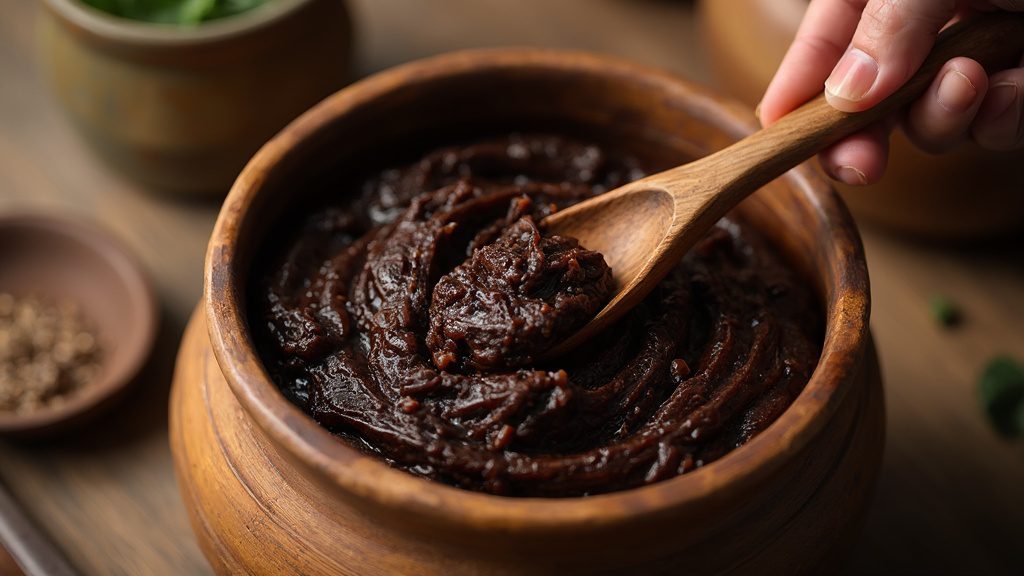
Doenjang (된장) is a thick, salty paste made from soybeans that have been boiled, pressed into blocks, fermented with wild molds and bacteria, and then aged in brine — usually for months, sometimes for years. The name is literal: doen means thick or stiff, jang means a fermented paste or sauce. Say it “dwen-jahng,” with the first syllable close to the English word “when” and a soft j in the second. Nobody at a Korean market will blink if you get it slightly wrong.
What sets it apart from every other soybean paste on the shelf is that it’s essentially a co-product. In the traditional method, fermented soybean blocks steep in salt water inside a clay crock. The liquid drawn off becomes ganjang, Korean soy sauce. What’s left behind — the mashed, salt-cured solids — is doenjang. Two staples from one crock. That shared origin is why the two taste like relatives, and why a good doenjang carries a soy-sauce depth that miso simply doesn’t have.
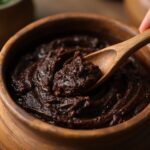
The texture surprises people. Doenjang isn’t the smooth, spreadable paste you may know from Japanese miso. It’s coarse, often with visible bits of broken soybean, and it can put up a grainy resistance when you push a spoon into it. That’s normal. The color runs from warm caramel brown to something close to espresso, depending on how long it aged and whether it’s traditional or commercially produced.
Flavor-wise, expect three things at once: salt, a deep savory umami, and a distinct funk that people describe as barnyard-y or cheese-like. That funk is the fermentation talking. In Korean home cooking, it isn’t a flaw to be minimized — it’s the whole point, the thing that makes a plain pot of vegetables taste like it’s been simmering all afternoon.
One clarification worth making early, because it trips up almost everyone: doenjang is one of several Korean jangs, a family of fermented seasonings that also includes ganjang (soy sauce), gochujang (the sweet-spicy red chili paste), and ssamjang (a seasoned dipping mixture). They aren’t interchangeable, and they aren’t variations on one product. Each has its own base, its own fermentation, and its own job at the table.
Nutritionally, the short version: doenjang is a fermented soy food and a high-sodium seasoning. Fermented foods as a category have drawn real research interest for their relationship to gut microbial diversity, though most of that work looks at fermented foods broadly rather than doenjang specifically. Treat it the way you’d treat soy sauce or anchovy paste — a flavor ingredient used by the tablespoon, not a health food eaten by the bowl.
How Doenjang Is Made: Meju, Brine, and Time
Four stages turn a bag of dry soybeans into doenjang: cook the beans, form and ferment them into blocks called meju, submerge those blocks in salt brine, then separate the liquid from the solids and age what’s left. The whole cycle traditionally runs from late fall through the following summer or beyond. Knowing those stages is what lets you read a label and tell whether you’re holding something that spent a year in a crock or six weeks in a stainless tank.
The Four Stages, Start to Finish
Stage one: cook and crush. Soybeans get soaked, then boiled until soft enough to mash. In Korean home kitchens this was an all-day affair, and the smell of boiling soybeans is one of those markers of late autumn that anyone who grew up around it recognizes instantly.
Stage two: shape and ferment the meju. The mashed beans are pressed into bricks — usually rectangular, roughly the size of a large loaf — tied with rice straw, and hung to dry in a cool, ventilated space. This is where the microbiology gets interesting. Nothing is inoculated from a packet. Wild molds (largely Aspergillus and Bacillus species) drift in from the air, the straw, and the room itself, colonize the surface, and start breaking soy protein down into amino acids. The blocks dry, darken, and crack over several weeks to a couple of months. They smell strong. That’s expected.
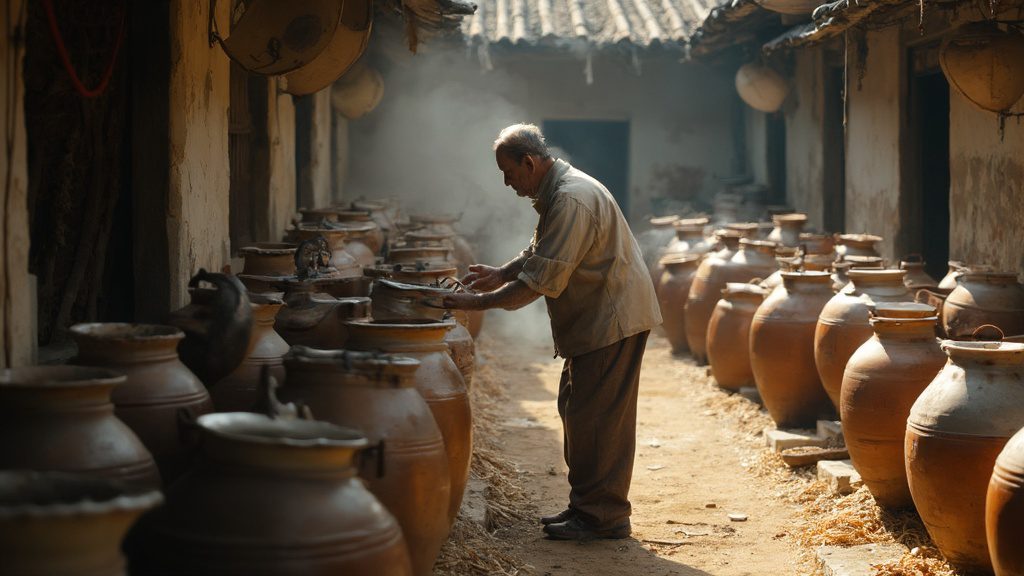
Stage three: the brine. The dried meju blocks go into a clay crock called an onggi, covered with salt water. Charcoal, dried chilies, and jujubes are often floated on top — partly tradition, partly practical. The crock sits outdoors, lid open on sunny days, closed against rain, for roughly one to three months. Salt does the heavy lifting: it keeps unwanted organisms out while the salt-tolerant ones keep working.
Stage four: the split. The dark liquid is drained off and becomes ganjang. The softened solids get mashed, packed back into a crock, and aged further — a few more months at minimum, sometimes years. That aging is where the sharp edges round off.
Traditional (Jaeraesik) vs Factory-Made
The practical difference between traditional doenjang and the commercial kind isn’t good versus bad. It’s predictability versus character.
Traditional doenjang (jaeraesik, “made the old way”) relies on that wild, uncontrolled meju fermentation. Every batch differs a little because the microbial population differs a little. It’s typically saltier, funkier, coarser, and darker. Korea’s Ministry of Agriculture, Food and Rural Affairs and the country’s traditional food certification system maintain formal standards for these products, which is why you’ll sometimes see certification marks on Korean-market jars. I’d rather point you to the label than quote numbers I can’t verify for a specific brand.
Factory doenjang usually starts from a controlled koji culture — often Aspergillus oryzae, the same workhorse used in Japanese miso — and frequently includes wheat flour or rice as a starch base. Fermentation is shorter, temperature-controlled, and consistent. The result is smoother, milder, less salty, and a lot more forgiving if you’re new to cooking with it. Most jars sold in US Korean markets fall into this category.
Why Some Jars Taste Sharp and Others Taste Round
Three variables explain almost all the flavor variation you’ll run into: time, salt, and starch.
Longer aging means more protein breakdown, which means more free amino acids — deeper savoriness, darker color, mellower edges. A young doenjang tastes aggressive and one-dimensionally salty by comparison. Higher salt slows fermentation and pushes the flavor toward sharp and briny. And when wheat or rice is part of the recipe, that starch ferments into sugars, which is why some commercial pastes taste noticeably rounder and a little sweet.
There’s one more variable people underestimate: the crock. Onggi are unglazed and slightly porous, so they breathe. Air exchange over a year of aging changes the outcome in ways a sealed plastic tub can’t replicate. Whether that difference justifies the price gap is a judgment call, and one I’ll come back to once we’ve covered what to look for on a label.
Doenjang vs Miso vs Gochujang vs Ssamjang
Take one thing from this section: doenjang and miso are cousins, not twins, and the other two aren’t even in the same family. Miso can stand in for doenjang with some adjusting. Gochujang and ssamjang can’t — swap them in and you’ll get a completely different dish. Here’s how to tell them apart and when a substitution actually works.
Quick Comparison Table (Base, Salt, Texture, Best Use)
| Base | Fermentation | Texture | Saltiness | Best at | |
|---|---|---|---|---|---|
| Doenjang | Soybeans, salt, water; grain optional | Wild molds or koji, months to years | Coarse, chunky, sometimes grainy | High | Stews, soups, marinades, dressings |
| Miso | Soybeans + rice or barley koji | Controlled koji, weeks to months | Smooth, spreadable | Moderate (varies by type) | Soups, glazes, dressings |
| Gochujang | Chili powder, glutinous rice, fermented soybean powder, malt | Weeks to months | Smooth, sticky, thick | Moderate, plus sweet and spicy | Bibimbap, tteokbokki, spicy braises |
| Ssamjang | Doenjang + gochujang + aromatics, sesame oil, sugar | None on its own — it’s a blend | Thick, spoonable | Moderate | Dipping sauce for grilled meat and lettuce wraps |
The row that matters most is the base. Miso relies on a grain koji that ferments into sugar, which is why it tastes rounder and sweeter. Doenjang is mostly soybean, fermented longer, with less sugar to soften the edges. Gochujang’s defining ingredient is chili, not soybean. And ssamjang isn’t a fermented product at all — it’s a mixture built from two things that already are.
When Miso Can Stand In — And When It Can’t
Miso works as a doenjang substitute in soups, marinades, and dressings, as long as you accept a milder, sweeter result. Reach for red miso (aka miso) over white; the longer-fermented red comes closer in depth. Use roughly the same volume, then taste — you’ll usually want a splash of soy sauce to make up the missing savory weight, and possibly a little less sugar elsewhere in the recipe.
Where the swap falls apart is doenjang jjigae. That stew’s entire identity is doenjang’s funk and salt cutting through a rich broth. Miso gives you something pleasant and Japanese-tasting instead, which is fine, but it isn’t the dish. The reverse has the same problem: doenjang in a delicate miso soup will bulldoze the dashi.
Going the other direction — doenjang standing in for miso — start with about two-thirds the amount and adjust upward. It’s saltier and more assertive, and the coarse texture will show in a clear broth unless you strain it.
Ssamjang and Gochujang: Different Jobs Entirely
Gochujang brings heat and sweetness; doenjang brings salt and funk. They aren’t competitors — plenty of Korean recipes call for both in the same pot precisely because each does something the other can’t. Substituting one for the other doesn’t give you a variation. It gives you a mistake.
Ssamjang deserves a specific note, because it’s the most commonly misunderstood jar on the shelf. It’s a finished condiment, already seasoned and sweetened, meant to be eaten as-is on a piece of grilled pork wrapped in lettuce. Cooking with it means cooking with sugar, sesame oil, and garlic you didn’t account for. If a recipe calls for doenjang and ssamjang is all you have, you can use it — just cut or drop any other sugar and sesame oil in the recipe, and expect a sweeter, softer result. It’s a workaround, not an equivalent.
What Doenjang Tastes Like and How to Use It
The most useful way to think about it: doenjang is a salt substitute with a personality. Anywhere you’d add salt plus something savory — a pot of broth, a marinade, a vinaigrette — a small amount can do both jobs at once. The catch is that it also brings funk and a little grit, so the question isn’t whether it belongs in a dish but how much of the dish you want it to define.
Taste a little straight off the spoon before you cook with it. Do this with every new jar. You’re calibrating for three things: how salty it is, how sharp the funk is, and whether there’s any sweetness from added grain. Two jars from the same shelf can differ enough to change your measurements by half.
Heat changes it, too. Raw doenjang tastes sharper and more pungent; ten minutes of simmering settles it down and brings the savory depth forward. That’s why the same tablespoon behaves differently in a salad dressing than in a stew.
Five Ways to Cook With Doenjang Tonight
In broth. The obvious one, and still the best entry point. Whisk a spoonful into simmering water or stock with a few dried anchovies or a piece of kelp, add vegetables and tofu, and you have dinner. This is the backbone of both jjigae and guk.
As a marinade for meat. Doenjang with minced garlic, a little rice syrup or honey, sesame oil, and black pepper makes an excellent rub for pork shoulder, chicken thighs, or short ribs. The salt seasons the meat, and enzymes from the fermentation help tenderize it. Give it a few hours in the fridge, up to overnight. Watch your grill heat — the sugars in the marinade brown fast.
In a vinaigrette. Whisk about a teaspoon of doenjang into rice vinegar, then stream in a neutral oil or perilla oil. A little honey balances it. It’s terrific on blanched spinach, cucumbers, or a sturdy green salad, and it covers both the salt and the anchovy you’d find in a Caesar.
Stirred into blanched vegetables. In Korean home cooking this is called namul, and it’s the quietest, most everyday use of the paste. Blanch spinach or bean sprouts, squeeze them dry, toss with a scant half-teaspoon of doenjang, sesame oil, garlic, and toasted sesame seeds. Nothing else. Four minutes, start to finish.
In pasta and other non-Korean dishes. A teaspoon melted into butter for a pan sauce, or stirred into tomato sauce, adds the same savory backbone that anchovy or a Parmesan rind provides. This isn’t traditional — it’s a genuinely good idea that a lot of cooks arrived at independently, and doenjang pasta has picked up real momentum over the last couple of years.
The Rule of Thumb for How Much to Add
Start with one tablespoon per 2 cups of liquid for soups and stews, then taste and adjust upward. For dressings and dips, start at one teaspoon per quarter cup of finished sauce. For marinades, about one tablespoon per pound of meat.
Those numbers assume a standard commercial jar. With traditional doenjang, cut them by roughly a third — it’s saltier and more assertive, and you can always add more.
Two habits will save you. First, add it early enough to simmer, but taste before you salt anything else. Second, dissolve it properly. Don’t drop a spoonful into a pot and walk away. Push it through a small strainer with the back of a spoon, or whisk it with a few tablespoons of hot broth in a separate bowl first, then stir that in. Otherwise you get clumps that dissolve unevenly — one bite bland, the next a salt bomb.
The failure mode I see most often in American kitchens is overcorrecting in the wrong direction. A dish tastes flat, so in goes more doenjang, and now it’s too salty and too funky and there’s no rescuing it. Nine times out of ten the missing element was fat or acid, not more paste. A drizzle of sesame oil or a splash of vinegar fixes more flat doenjang dishes than another spoonful ever will.
Doenjang Jjigae and Other Core Recipes
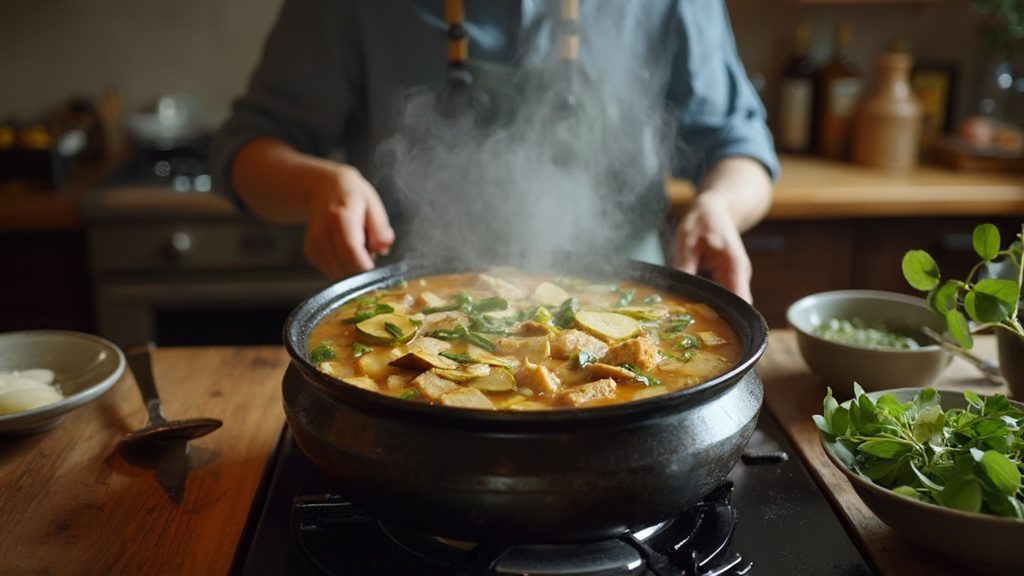
Doenjang jjigae is the dish to start with, and it’s the reason most Americans buy their first jar. It’s a thick, aggressively savory stew of tofu, vegetables, and a heavy dose of paste, served bubbling in a stone pot with rice. If you make one doenjang dish in your life, make this one — it teaches you what the ingredient does better than any explanation can.
But jjigae isn’t the only place doenjang goes, and in plenty of Korean households it isn’t even the everyday choice. There’s a lighter cousin most Americans have never heard of, plus a whole category of uses that has nothing to do with soup.
Jjigae vs Guk: Thick Stew or Clear Soup
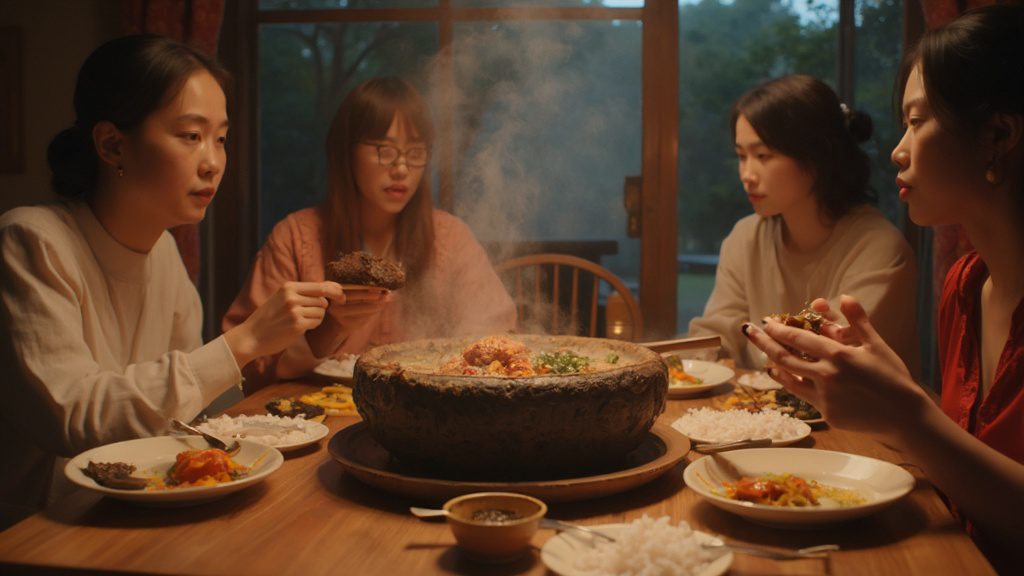
The difference comes down to ratio. Jjigae is stew: less liquid, more solids, heavily seasoned, meant to be shared from a communal pot at the center of the table. Guk is soup: more broth, fewer solids, gently seasoned, served in an individual bowl alongside your rice as part of the meal rather than as its centerpiece.
Doenjang jjigae uses roughly double the paste per cup of liquid that doenjang guk does. That one variable changes everything — color, intensity, and the role the dish plays at the table. A jjigae dominates the meal. A guk supports it.
The most common guk in Korean homes is baechu doenjang guk, made with napa cabbage — the same cabbage used for kimchi, but fresh. Cabbage, a light anchovy or kelp broth, a modest spoonful of doenjang, maybe some sliced scallion. Spinach guk is nearly as common. These are quiet, everyday soups, the kind my grandmother made without measuring anything, and they’re a gentler introduction to the flavor than the full-strength stew.
A few practical notes that apply to both:
Build a real broth first. Water with doenjang stirred into it tastes exactly like water with doenjang stirred into it. Ten minutes of simmering dried anchovies and a piece of dried kelp, then straining, is the single highest-return step in the whole process. Vegetarian version: dried shiitake and kelp.
Add the paste after the broth, before the vegetables. It needs simmering time to round out, but it doesn’t need thirty minutes.
Tofu goes in near the end. Five minutes is plenty. Any longer and it toughens.
Zucchini, potato, onion, green chili, mushrooms are the standard vegetable lineup. Korean zucchini (aehobak) is shorter and paler than the Italian kind, but regular zucchini works fine.
Beyond the Stew: Pasta, Dressings, Braises
Braises are where doenjang quietly shines and almost nobody outside Korea thinks to look. A spoonful in a pot of braised short ribs, pork belly, or even a beef chuck roast lays down a savory floor that soy sauce alone can’t reach. It behaves like miso in a braise but with more backbone. Add it early with the aromatics and let it cook down with everything else.
Doenjang pasta has become a genuine phenomenon over the past two years, and it earns the attention. The logic holds up: a teaspoon of doenjang melted into butter, garlic, and a splash of pasta water gives you something structurally close to cacio e pepe or an anchovy-butter sauce, with a different kind of depth. Cream, mushrooms, and a heavy grind of black pepper are the usual companions. Keep the amount small — a teaspoon for two servings — because the pasta water is already salted and the paste will take over fast.
Then there’s ssamjang, which you can mix yourself instead of buying pre-made. Combine roughly three parts doenjang to one part gochujang, then add minced garlic, chopped scallion, sesame oil, toasted sesame seeds, and a small amount of honey or rice syrup. Adjust to taste. Making it yourself lets you control the sweetness, which is the main complaint people have about the commercial jars, and it’s the right partner for grilled pork belly wrapped in lettuce.
One more that surprises people: doenjang as a glaze on roasted vegetables. Thin it with a little water, oil, and honey, brush it on eggplant, halved cabbage, or sweet potatoes, and roast until the edges caramelize. Not a traditional preparation, but it works for exactly the same reason a miso glaze works — and doenjang brings more character to it.
How to Buy Doenjang: Labels, Brands, and Gluten
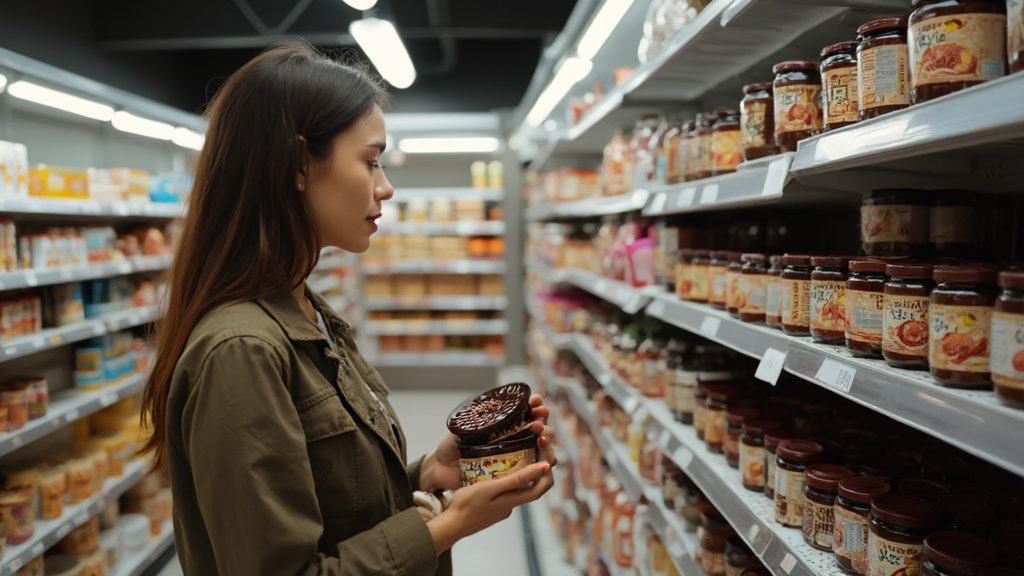
Flip the tub over and read the ingredient list before you look at anything else. That one habit tells you more than the brand name, the price, or the packaging. A short list — soybeans, salt, water — means a fermented paste doing the work. A long list with wheat flour, corn syrup, alcohol, and seasoning extracts means something engineered for mildness and shelf stability. Both have their place. You just want to know which one you’re holding.
Where to find it: any Korean grocery is the reliable answer — H Mart, Zion Market, and the regional Korean chains all carry several options. Larger Asian supermarkets like 99 Ranch usually stock at least one. Mainstream US grocery stores are hit-or-miss; some Whole Foods and Wegmans locations keep a jar in the international aisle, most don’t. Online, the major Korean-food retailers and Amazon both stock the common brands, though shipping a heavy tub of paste can cost more than the paste.
The brands you’ll actually run into here are a short list: CJ Haechandle, Sempio, and Chung Jung One dominate the shelf space. All three are large Korean food companies making modern, koji-based pastes. They’re consistent, reasonably mild, and fine — genuinely fine — for everything described here. Smaller and specialty producers, including traditionally made jaeraesik pastes, turn up in better-stocked Korean markets at a noticeably higher price.
Size matters more than people expect. The standard tubs run large — a kilogram or more is common, which is over two pounds of paste. Given how little you use per dish, that’s a long-term commitment. If a smaller container is available for your first jar, take it.
What to Read on the Ingredient Label
Four things to look for, in order of usefulness:
The first ingredient. It should be soybeans. If wheat flour is listed first or second, you’re holding a paste where grain does a lot of the work — milder, sweeter, and thinner on the depth you came for.
Added sugars and syrups. Corn syrup, fructose, or “oligosaccharide” mean a sweeter product. Not disqualifying, but plan to cut sugar elsewhere in the recipe.
Sodium per serving. The Nutrition Facts panel the FDA requires on packaged foods sold in the US is your honest comparison tool between jars. Doenjang is high in sodium by design, and the numbers vary meaningfully between brands. If you’re managing sodium for any reason, this is the line to check — and worth raising with your own physician or a registered dietitian rather than guessing.
Alcohol or preservatives. Ethyl alcohol shows up in some commercial pastes to halt fermentation and keep the tub from swelling. It’s a processing choice, not a red flag, but it tells you the product isn’t meant to keep evolving in your fridge.
What you won’t find on most labels is aging time. Korean producers generally aren’t required to disclose it, and few volunteer it. Color and texture are your proxies: darker and coarser usually means longer.
Is Doenjang Gluten-Free? What to Check
Most commercial doenjang is not gluten-free, and you have to check each jar. Traditional doenjang made only from soybeans, salt, and water has no gluten ingredients. But many factory pastes include wheat flour as part of the koji base, and that isn’t a trace amount — it’s a formulation ingredient.
Read the allergen statement. Under the US Food Allergen Labeling and Consumer Protection Act, wheat is one of the major allergens that must be declared on packaged foods sold here, so a “Contains: wheat, soybean” line at the bottom of the label is your clearest signal. The absence of that line isn’t automatic clearance, though — scan the ingredient list itself for wheat flour, barley, or malt.
If you need certainty, look for an explicit “gluten-free” claim on the package. The FDA regulates that term for packaged foods, requiring products bearing it to contain less than 20 parts per million of gluten. A handful of doenjang products do carry the claim. Cross-contamination during manufacturing is a separate question a label can’t fully answer, and for celiac disease specifically, that’s a conversation to have with your own clinician or dietitian.
One practical note if gluten is a hard constraint: the miso route has the same problem. Plenty of miso contains barley. Chickpea miso and some soy-only misos are made without gluten grains, but the same label-reading applies.
Storage, Shelf Life, and the White Stuff on Top
Refrigerate after opening, keep the surface flat and covered, and never let a wet or dirty spoon touch it. Do those three things and an opened tub will keep in your fridge for a year or more — between the salt content and the fermentation itself, this is one of the more forgiving ingredients in your kitchen. It won’t spoil quickly. It will, however, change.
Unopened, a sealed tub keeps at room temperature until the printed date, though I’d still move it to the fridge once you get it home if you have the space. Heat accelerates everything.
Here’s the storage detail Korean households treat as non-negotiable: after you scoop, smooth the surface back down with the spoon so it’s level, then press plastic wrap directly against the paste before you put the lid on. Air pockets and an uneven surface are where problems start. Some people go further and pour a thin film of sesame oil on top as a seal. That works too, though it’s more common with homemade batches.
The dirty spoon rule matters more than people think. Water and food particles introduce organisms the salt wasn’t designed to handle, and they give surface mold a foothold it wouldn’t otherwise get. Dry spoon, clean spoon, every time.
What normal aging looks like: the paste darkens over months in the fridge — caramel brown drifting toward near-black. The flavor deepens and sharpens a little. Liquid may separate and pool on the surface; stir it back in. Some tubs develop a stronger smell. None of that is spoilage. It’s the same process that made the paste in the first place, running slowly at refrigerator temperature.
White film or white crystals on the surface are usually harmless, and two different things produce them. The first is kahm yeast, a flat, white, sometimes wrinkled film that grows on salty fermented foods exposed to air. It isn’t dangerous — scrape it off, smooth the surface, re-cover. The second is tyrosine, an amino acid that crystallizes out of long-fermented soy products as small white specks or a gritty patch. Tyrosine signals extended fermentation, not a defect. You’ll see the same thing in aged cheeses and long-aged miso.
What means throw it out: fuzzy mold in colors — blue, green, black, pink, or anything raised and hairy. That’s a different organism from surface yeast, and with a soft, high-moisture food you can’t reliably cut around it, because mold networks extend past what you can see. Same verdict for a sour, alcoholic, or genuinely rotten smell that’s distinct from the paste’s normal funk, or for a tub that’s swollen and hisses when you open it. And when you can’t tell the difference between normal funk and something wrong, that uncertainty is your answer — a two-pound tub isn’t worth the gamble. The USDA’s general guidance on visible mold in soft, moist foods is to discard rather than trim, and that’s a reasonable default for a fermented paste.
One adjustment worth making in an American kitchen: because these tubs are large and most households use a tablespoon at a time, consider splitting a new one. Move what you’ll use over the next few months into a small, clean glass jar for the fridge door, and keep the rest sealed and pressed flat in the back. Fewer openings, less air exposure, less handling of the main supply. Small habit, and it meaningfully extends how long the bulk of the tub stays exactly as you bought it.
What I Look for After Years of Cooking With Doenjang
If someone asked me to name the one thing that separates a good jar from a mediocre one, it wouldn’t be the price or the certification mark. It’s whether the paste tastes like soybeans underneath the salt. Cheap, fast-fermented pastes taste like salt with a soy-sauce note stapled on. Good ones have a roundness — something almost sweet and nutty sitting under the funk. You can find that in a ten-dollar tub and miss it in a twenty-five-dollar one.
I’ve run the comparison directly, more than once: same broth, same vegetables, same tofu, two pots, one with a standard commercial paste and one with traditional crock-aged doenjang from a small producer. The difference is real but narrower than the price gap suggests. The traditional stew had more length — the flavor kept going after the swallow instead of stopping short — and a slightly wilder, sharper edge. The commercial stew was cleaner, rounder, more immediately pleasant. Blind, most people I’ve served preferred the commercial version, at least at first. Familiar reads as better until your palate catches up.
Which brings me to what I actually recommend for a first jar: a standard commercial paste from one of the major Korean brands. Not because it’s superior, but because it’s consistent, and consistency is what a beginner needs. If your first stew comes out wrong, you want to know it was your ratio and not the jar. Traditional doenjang varies batch to batch by design, and that variability is a gift to an experienced cook and a source of confusion to a new one. Save the funky expensive one for your second jar, once you know what a normal one tastes like.
My own mistake, made early and repeated more than I’d like to admit: I treated the ratio as fixed. A recipe said two tablespoons, so in went two tablespoons, regardless of which jar was open. The first time I did that with a traditionally fermented paste, the stew was nearly inedible — punishingly salty, and the funk had gone from interesting to overwhelming. I’d thrown away two dollars of ingredients and an hour, and the fix was ten seconds of tasting the paste on a spoon before it hit the pot.
That’s the habit I’d hand anyone starting out. Taste first, measure second. Recipes assume a paste they’ve never seen you buy.
Three other things I check, none of which appear on a label:
Color at the surface versus deeper in. Scoop a spoonful from the middle. If the deep paste is noticeably lighter than the surface, the tub has been oxidizing rather than aging — a sign it sat open somewhere, or the seal was poor.
How it behaves in water. Good doenjang disperses into hot broth with a little coaxing and leaves a suspension, not a sludge. If it stubbornly stays in clumps no matter how you work it, there’s a lot of filler in there.
Whether it makes me want a second bowl. Unscientific, and the most reliable test I have. A well-made doenjang stew has a quality Koreans call gushu-hada — a deep, toasty, comforting savoriness that pulls you back for more. I can’t chart that. But it’s what my grandmother was after when she opened her crock in the yard, and it’s what I’m still looking for when I open a plastic tub in New Jersey.
One last note, offered as a doctor and not just a cook: this is a high-sodium seasoning, and I use it as one. It goes into food by the tablespoon, and I won’t pretend a stew built on it is a low-salt meal. If sodium is something you’re actively managing, the numbers on the panel are worth reading and worth discussing with your own clinician. Enjoying the ingredient and being honest about what’s in it aren’t in conflict.
Doenjang FAQ
Can I use miso instead of doenjang?
Yes, with adjustments — use red miso, match the volume, and add a splash of soy sauce to make up the missing depth. The result will be milder and sweeter than the original, which is fine for dressings, marinades, and most soups. The one place I’d steer you away from the swap is doenjang jjigae, where the paste’s specific funk is the dish’s entire identity.
Is doenjang healthy?
Doenjang is a fermented soy food that’s also high in sodium, and both halves of that sentence matter. Research on fermented foods as a category has found associations with gut microbial diversity, though most of that work studies fermented foods broadly rather than doenjang specifically, and it doesn’t establish that any one food treats or prevents a condition. Practically speaking, you’re eating it a tablespoon at a time as a seasoning, so sodium is the number worth watching — and if you’re managing blood pressure or sodium intake for any reason, that’s a question for your own physician or a registered dietitian.
How long does an opened jar last?
Kept refrigerated, surface smoothed and covered, and touched only with a clean dry spoon, an opened tub stays good for a year or more. It’ll darken and sharpen over that time — that’s aging, not spoilage. Throw it out for fuzzy colored mold, a swollen container, or a smell that reads as rotten rather than funky.
What if I can’t find doenjang anywhere?
Red miso plus a splash of soy sauce is the most available substitute in a standard US grocery store, and it gets you maybe seventy percent of the way there. Chinese fermented soybean paste and Japanese hatcho miso both come closer in depth if your store carries them. Before you settle, though, check whether a Korean market is within driving distance — one tub lasts most households a year, so a single trip solves the problem for a long time.
I’ll be honest with you: the first jar of doenjang I cooked with in my own American kitchen taught me more than any description could. It rewards a lighter hand than most recipes suggest — start with a tablespoon in a small pot, taste, and go from there. If you remember only three things from all of this, make them these: read the ingredient list before the jar comes home with you, keep it cold and covered and handled with a clean spoon after opening, and treat it as the seasoning that carries the dish rather than one flavor among many. My suggestion for the coming week is simple. Make one pot of doenjang jjigae, pay attention to how the paste behaves as it simmers, and let that single dish calibrate your palate. Once you know what your particular jar tastes like, the marinades, dressings, and clear soups get much easier.
Related reading